

Top Books of 1954
The most significant literary works published this year.

The Lord of the Rings
By Unknown Author
Originally published from 1954 through 1956, J.R.R. Tolkien's richly complex series ushered in a new age of epic adventure storytelling. A philologist and illustrator who took inspiration from his work, Tolkien invented the modern heroic quest novel from the ground up, creating not just a world, but a domain, not just a lexicon, but a language, that would spawn countless imitators and lead to the inception of the epic fantasy genre. Today, THE LORD OF THE RINGS is considered "the most influential fantasy novel ever written." (THE ENCYCLOPEDIA OF FANTASY) During his travels across Middle-earth, the hobbit Bilbo Baggins had found the Ring. But the simple band of gold was far from ordinary; it was in fact the One Ring - the greatest of the ancient Rings of Power. Sauron, the Dark Lord, had infused it with his own evil magic, and when it was lost, he was forced to flee into hiding. But now Sauron's exile has ended and his power is spreading anew, fueled by the knowledge that his treasure has been found. He has gathered all the Great Rings to him, and will stop at nothing to reclaim the One that will complete his dominion. The only way to stop him is to cast the Ruling Ring deep into the Fire-Mountain at the heart of the land of Mordor--Sauron's dark realm. Fate has placed the burden in the hands of Frodo Baggins, Bilbo's heir...and he is resolved to bear it to its end. Or his own. ---------- **Contains** - [The Fellowship of the Ring][1] - [The Two Towers][2] - [The Return of the King][3] - [The Lord of the Rings [2/2]](https://openlibrary.org/works/OL27306128W) - [The Lord of the Rings [1/6]](https://openlibrary.org/works/OL24170898W) - [The Lord of the Rings [1/9]](https://openlibrary.org/works/OL27305953W) - [The Lord of the Rings [2/9]](https://openlibrary.org/works/OL27305892W) - [The Lord of the Rings [3/9]](https://openlibrary.org/works/OL27306048W) [1]: https://openlibrary.org/works/OL14933414W/The_Fellowship_of_the_Ring [2]: https://openlibrary.org/works/OL27479W/The_Two_Towers [3]: https://openlibrary.org/works/OL27516W/The_Return_of_the_King

The Horse and His Boy
By Unknown Author
A boy and a talking horse share an adventurous and dangerous journey to Narnia to warn of invading barbarians.
The Fellowship of the Ring
By Unknown Author
One Ring to rule them all, One Ring to find them, One Ring to bring them all and in the darkness bind them. “A unique, wholly realized other world, evoked from deep in the well of Time, massively detailed, absorbingly entertaining, profound in meaning.”—The New York Times In ancient times the Rings of Power were crafted by the Elven-smiths, and Sauron, the Dark Lord, forged the One Ring, filling it with his own power so that he could rule all others. But the One Ring was taken from him, and though he sought it throughout Middle-earth, it remained lost to him. After many ages it fell into the hands of Bilbo Baggins, as told in The Hobbit. In a sleepy village in the Shire, young Frodo Baggins finds himself faced with an immense task, as his elderly cousin Bilbo entrusts the Ring to his care. Frodo must leave his home and make a perilous journey across Middle-earth to the Cracks of Doom, there to destroy the Ring and foil the Dark Lord in his evil purpose.
Lord of the Flies
By Unknown Author
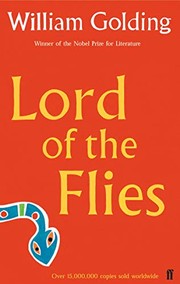
Lord of the Flies is a 1954 novel by Nobel Prize–winning British author William Golding. The book focuses on a group of British boys stranded on an uninhabited island and their disastrous attempt to govern themselves. Themes include the tension between groupthink and individuality, between rational and emotional reactions, and between morality and immorality. The novel has been generally well received. It was named in the Modern Library 100 Best Novels, reaching number 41 on the editor's list, and 25 on the reader's list. In 2003 it was listed at number 70 on the BBC's The Big Read poll, and in 2005 Time magazine named it as one of the 100 best English-language novels from 1923 to 2005. Time also included the novel in its list of the 100 Best Young-Adult Books of All Time. Popular reading in schools, especially in the English-speaking world, a 2016 UK poll saw Lord of the Flies ranked third in the nation's favourite books from school. (From https://en.wikipedia.org/wiki/Lord_of_the_Flies)

The Two Towers
By Unknown Author
The Lord of the Rings, J.R.R. Tolkien's three-volume epic, is set in the imaginary world of Middle-earth -- home to many strange beings, and most notably hobbits, a peace-loving "little people," cheerful and shy. Since its original British publication in 1954-55, the saga has entranced readers of all ages. It is at once a classic myth and a modern fairy tale. Critic Michael Straight has hailed it as one of the "very few works of genius in recent literature." Middle-earth is a world receptive to poets, scholars, children, and all other people of good will. Donald Barr has described it as "a scrubbed morning world, and a ringing nightmare world...especially sunlit, and shadowed by perils very fundamental, of a peculiarly uncompounded darkness." The story of this world is one of high and heroic adventure. Barr compared it to Beowulf, C.S. Lewis to Orlando Furioso, W.H. Auden to The Thirty-nine Steps. In fact the saga is sui generis -- a triumph of imagination which springs to life within its own framework and on its own terms. - Jacket flap. Frodo and the Companions of the Ring have been beset by danger during their quest to prevent the Ruling Ring from falling into the hands of the Dark Lord by destroying it in the Cracks of Doom. They have lost the wizard, Gandalf, in the battle with an evil spirit in the Mines of Moria; and at the Falls of Rauros, Boromir, seduced by the power of the Ring, tried to seize it by force. While Frodo and Sam made their escape the rest of the company were attacked by Orcs. Now they continue their journey alone down the great River Anduin – alone, that is, save for the mysterious creeping figure that follows wherever they go. J.R.R. Tolkien’s great work of imaginative fiction has been labelled both a heroic romance and a classic fantasy fiction. By turns comic and homely, epic and diabolic, the narrative moves through countless changes of scene and character in an imaginary world which is totally convincing in its detail. ---------- **Also contained in:** - [The Lord of the Rings][1] [1]: https://openlibrary.org/works/OL27448W/The_Lord_of_the_Rings

Bonjour tristesse
By Unknown Author
The literary sensation of Paris in 1954 was *"Bonjour Tristesse,"* a novel written by an eighteen year, old girl. By 1955 in translation it was offered to American readers. Some found it shocking but here was a talent extraordinary for its maturity of style and its adult perceptiveness of human character.

Live and let die
By Unknown Author
Beautiful, fortune-telling Solitaire is the prisoner (and tool) of Mr Big - master of fear, artist in crime and Voodoo Baron of Death. James Bond has no time for superstition - he knows that Mr Big is also a top SMERSH operative and a real threat. More than that, after tracking him through the jazz joints of Harlem, to the Everglades and on to the Caribbean, 007 has realized that Mr Big is one of the most dangerous men that he has ever faced. And no-one, not even the enigmatic Solitaire, can be sure how their battle of wills is going to end ...
Destination Unknown
By Unknown Author
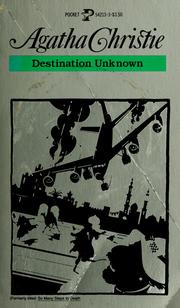
Hilary Craven has lost the will to live, Mrs Betterton is already dead. Then Hilary is asked to impersonate the dead woman and to trace her husband - a missing nuclear scientist - and her will to live returns. A faked air disaster, a string of radio-active pearls, a leper colony floundering in the dry heat of the Moroccan desert. Hilary is lead towards a terrifying discovery and her new found enthusiasm for life turns into ice-cold fear...Christie based this book partly on the activities of two famous physicists of the early 1950s: Bruno Ponecorvo, who defected to Russia, and Emil Fuchs, who spied for the Russians. It is another of Christie's light-hearted thriller novels featuring a daring and fearless heroine.
Histoire d'O
By Unknown Author
the best handbook of bdsm - wriiten way before 50 shades and so much better
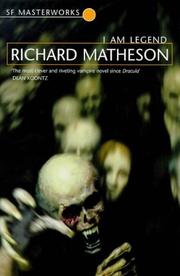
I am Legend
By Unknown Author
See work: https://openlibrary.org/works/OL64225W

Les Mandarins
By Unknown Author
An ironic tale of life and love in the French intellectual class.

The Naked Sun
By Unknown Author
On the remote planet Solaria the first murder for two hundred years has been committed. The Solarians are Spacers with a civilisation based on robots instead of slaves - and some pretty weird taboos and phobias. Into this strange set-up comes Terran detective Elijah Baley, assigned to find the murderer and act as an investigator for his government. But as an Earthman, Baley finds aspects of life on Solaria difficult, even terrifying, to cope with. (Men on Earth live deep underground in their vast caves of steel and are terrified of anything outside.) From the moment of his arrival on Solaria, Baley's investigation becomes an ordeal of nerves under the pitiless glare of the naked sun...
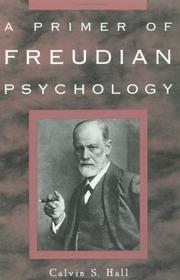
A Primer of Freudian Psychology
By Unknown Author
The purpose of this primer is to present clearly, briefly, and systematically the psychological theories advanced by Sigmund Freud. Freud's contributions in the areas of abnormal psychology, psychopathology, psychotherapy, and psychiatry have been summarized by a number of writers, but his work as a psychological theorist in the area of general psychology has not been presented in a systematic and comprehensive form. The author contends that Freud's distinctive role in intellectual and scientific history is that of a psychological theorist. Freud himself regarded psychoanalysis primarily as a system of psychology and not merely a branch of abnormal psychology or psychiatry. He wanted to be remembered and identified chiefly as a psychologist. The author's purpose, then, in summarizing the psychology of Sigmund Freud is to rescue him from the domain of mental disorders and to restore him to his legitimate place within the province of normal psychology. It is argued that if Freud is permitted to remain an exclusive possession of a branch of medicine, not only will his fundamental theories be relegated to a subordinate position, but also psychology will be the loser for having ignored one of its most creative minds. (PsycINFO Database Record (c) 2005 APA, all rights reserved).

The Toll-Gate
By Unknown Author
A captain who finds a toll gate unattended and solves the mystery of the disappearance of the gate keeper and wins the heroine with the help of an robber.

A Spy in the House of Love
By Unknown Author
Beautiful, bored and bourgeoise, Sabina leads a double life inspired by her relentless desire for brief encounters with near-strangers. Fired into faithlessness by a desperate longing for sexual fulfilment, she weaves a sensual web of deceit across New York. But when the secrecy of her affairs becomes too much to bear, Sabina makes a late night phone-call to a stranger from a bar, and begins a confession that captivates the unknown man and soon inspires him to seek her out...

Alanna
By Unknown Author
"From now on, I'm Alan of Trebond, the younger twin. I'll be a knight. And so yound Alanna of Trebond begins the journey to knighthood. Though a girl, Alanna has always craved the adventure and daring allowed only for boys; her twin brother, Thom, yearns to learn the art of magin. So one day they decide to switch places. Disguised as a girl, Thom heads for the convent to learn magic; Alanna, pretending to be a boy, is on her way to the castle of King Roald to begin training as a page. But the road to knighthood is not an easy one. As Alanna masters the skills necessary for battle, she must also learn to control her heart and discern her enemies from her allies. Filled with swords and scorcery, adventure and intrigue, good and evil, Alanna's first adventure begins--one that will lead to the fulfillment of her dreams and the magical destiny that will mke her a legend in her land.
The Practice of Management
By Unknown Author
"This classic volume achieves a remarkable width of appeal without sacrificing scientific accuracy or depth of analysis. It is a valuable contribution to the study of business efficiency which should be read by anyone wanting information about the developments and place of management, and it is as relevant today as when it was first written. This is a practical book, written out of many years of experience in working with managements of small, medium and large corporations. It aims to be a management guide, enabling readers to examine their own work and performance, to diagnose their weaknesses and to improve their own effectiveness as well as the results of the enterprise they are responsible for."--Publisher's description.

Reach for the Sky
By Unknown Author
A wonderful Biography of Douglas Bader, RAF pilot and ace of the Battle of Britain. He was extraordinary because both legs had to be amputated after a crash before the start of WWII and his tremendous wartime exploits and lifetime of accomplishments were with 2 artificial legs. I first read this book from my Jr high library and it has been a lifetime favorite I have re-read several times.

How to Lie with Statistics
By Unknown Author
Both charming and informative about how statistics are misused. Published long ago, but the tricks haven't changed.

The Eagle of the Ninth. 1400 Grundwörter.
By Unknown Author
A young centurion ventures among the hostile tribes beyond the Roman Wall to recover the eagle standard of the Ninth, a legion which mysteriously disappeared under his father's command.

How to live 365 days a year
By Unknown Author
A notable work from 1954.
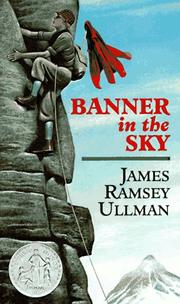
Banner in the Sky
By Unknown Author
Rudi dreams of climbing to the summit of the Citadel, the highest mountain in Switzerland. His father was the only man who dared to approach the top and he died in the pursuit. Now Rudi yearns to complete the quest. Adolescence.
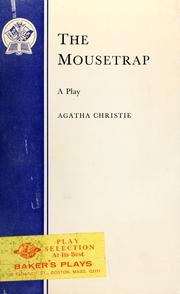
The Mousetrap
By Unknown Author
SYNOPSIS Mollie and Giles Ralston are opening their guesthouse, Monkswell Manor, for its first guests. They are new to the business and struggle with the details and an unusually heavy snowstorm. They hear on the radio that a Mrs. Maureen Lyon has been murdered in London and the suspect is wearing a dark overcoat, light scarf, and soft felt hat. Giles is wearing similar outerwear, as are many of the guests. After all the guests have settled in, Mollie receives a phone call from the police station. She is informed that Sergeant Trotter will be coming to the Manor and everyone must fully cooperate with him. The Sergeant arrives on skis, informing everyone that a notebook was found at the London crime scene, listing the address at which the murder occurred and also that of Monkswell Manor, implying that the guesthouse could be the site of a second murder. Soon
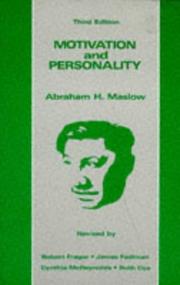
Motivation and personality
By Unknown Author
This is an article written by David Sze that I've found on The Huffington Post Abraham Maslow is the leading figure in the tradition of humanistic psychology and the modern Positive Psychology movement owes a huge debt to his theories. His ‘Hierarchy of Needs’ remains widely recognized and used. Nonetheless, the layperson knows surprisingly little about the pinnacle Maslow wants us to aspire to- Self-Actualization. Who is this Self-Actualized person, and what characteristics does s/he have? Maslow’s portrait is detailed and complex. Self-Actualization Maslow describes the good life as one directed towards self-actualization, the pinnacle need. Self-actualization occurs when you maximize your potential, doing the best that you are capable of doing. Maslow studied individuals whom he believed to be self-actualized, including Abraham Lincoln, Thomas Jefferson, and Albert Einstein, to derive the common characteristics of the self-actualized person. Here are a selection of the most important characteristics, from his book Motivation and Personality: 1) Self-actualized people embrace the unknown and the ambiguous. They are not threatened or afraid of it; instead, they accept it, are comfortable with it and are often attracted by it. They do not cling to the familiar. Maslow quotes Einstein: “The most beautiful thing we can experience is the mysterious.” 2) They accept themselves, together with all their flaws. She perceives herself as she is, and not as she would prefer herself to be. With a high level of self-acceptance, she lacks defensiveness, pose or artificiality. Eventually, shortcomings come to be seen not as shortcomings at all, but simply as neutral personal characteristics. “They can accept their own human nature in the stoic style, with all its shortcomings, with all its discrepancies from the ideal image without feeling real concern [...] One does not complain about water because it is wet, or about rocks because they are hard [...] simply noting and observing what is the case, without either arguing the matter or demanding that it be otherwise.” Nonetheless, while self-actualized people are accepting of shortcomings that are immutable, they do feel ashamed or regretful about changeable deficits and bad habits. 3) They prioritize and enjoy the journey, not just the destination. “[They] often [regard] as ends in themselves many experiences and activities that are, for other people, only means. Our subjects are somewhat more likely to appreciate for its own sake, and in an absolute way, the doing itself; they can often enjoy for its, own sake the getting to some place as well as the arriving. It is occasionally possible for them to make out of the most trivial and routine activity an intrinsically enjoyable game or dance or play.” 4) While they are inherently unconventional, they do not seek to shock or disturb. Unlike the average rebel, the self-actualized person recognizes: “... the world of people in which he lives could not understand or accept [his unconventionality], and since he has no wish to hurt them or to fight with them over every triviality, he will go through the ceremonies and rituals of convention with a good-humored shrug and with the best possible grace [... Self-actualized people would] usually behave in a conventional fashion simply because no great issues are involved or because they know people will be hurt or embarrassed by any other kind of behavior.” 5) They are motivated by growth, not by the satisfaction of needs. While most people are still struggling in the lower rungs of the ‘Hierarchy of Needs,’ the self-actualized person is focused on personal growth. “Our subjects no longer strive in the ordinary sense, but rather develop. They attempt to grow to perfection and to develop more and more fully in their own style. The motivation of ordinary men is a striving for the basic need gratifications that they lack.” 6) Self-actualized people have purpose. “[They have] some mission in life, some task to fulfill, some problem outside themselves which enlists much of their energies. [...] This is not necessarily a task that they would prefer or choose for themselves; it may be a task that they feel is their responsibility, duty, or obligation. [...] In general these tasks are nonpersonal or unselfish, concerned rather with the good of mankind in general.” 7) They are not troubled by the small things. Instead, they focus on the bigger picture. “They seem never to get so close to the trees that they fail to see the forest. They work within a framework of values that are broad and not petty, universal and not local, and in terms of a century rather than the moment.[...] This impression of being above small things [...] seems to impart a certain serenity and lack of worry over immediate concerns that make life easier not only for themselves but for all who are associated with them.” 8) Self-actualized people are grateful. They do not take their blessings for granted, and by doing so, maintain a fresh sense of wonder towards the universe. “Self-actualizing people have the wonderful capacity to appreciate again and again, freshly and naïvely, the basic goods of life, with awe, pleasure, wonder, and even ecstasy, however stale these experiences may have become to others [...] Thus for such a person, any sunset may be as beautiful as the first one, any flower may be of breath-taking loveliness, even after he has seen a million flowers. [...] For such people, even the casual workaday, moment-to-moment business of living can be thrilling.” 9) They share deep relationships with a few, but also feel identification and affection towards the entire human race. “Self-actualizing people have deeper and more profound interpersonal relations than any other adults [...] They are capable of more fusion, greater love, more perfect identification, more obliteration of the ego boundaries than other people would consider possible. [...This devotion] exists side by side with a widespreading [...] benevolence, affection, and friendliness. These people tend to be kind [and friendly] to almost everyone [...] of suitable character regardless of class, education, political belief, race, or color.” 10) Self-actualized people are humble. “They are all quite well aware of how little they know in comparison with what could be known and what is known by others. Because of this it is possible for them without pose to be honestly respectful and even humble before people who can teach them something.” 11) Self-actualized people resist enculturation. They do not allow themselves to be passively molded by culture — they deliberate and make their own decisions, selecting what they see as good, and rejecting what they see as bad. They neither accept all, like a sheep, nor reject all, like the average rebel. Self-actualized people: “make up their own minds, come to their own decisions, are self-starters, are responsible for themselves and their own destinies. [...] too many people do not make up their own minds, but have their minds made up for them by salesmen, advertisers, parents, propagandists, TV, newspapers and so on.” Because of their self-decision, self-actualized people have codes of ethics that are individualized and autonomous rather than being dictated by society. “They are the most ethical of people even though their ethics are not necessarily the same as those of the people around them [...because] the ordinary ethical behavior of the average person is largely conventional behavior rather than truly ethical behavior.” 12) Despite all this, self-actualized people are not perfect. “There are no perfect human beings! Persons can be found who are good, very good indeed, in fact, great. [...] And yet these very same people can at times be boring, irritating, petulant, selfish, angry, or depressed. To avoid disillusionment with human nature, we must first give up our illusions about it.”
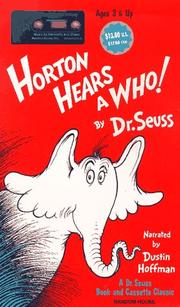
Horton Hears a Who!
By Unknown Author
A city of Whos on a speck of dust are threatened with destruction until the smallest Who of all helps convince Horton's friends that Whos really exist.
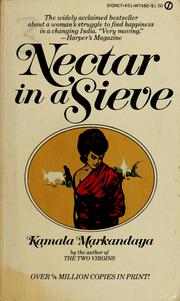
Nectar in a sieve
By Unknown Author
In a small village in India, a simple peasant woman recalls her life as a child bride, a farmer's wife, and a devoted mother amidst fights to meet changing times, poverty, and disaster.

The doors of perception
By Unknown Author
A notable work from 1954.
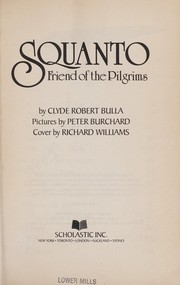
Squanto
By Unknown Author
A biography of the Indian who went to London with some of the first English explorers, was sold into slavery in Spain, and finally returned to America where he befriended the Pilgrims when they landed.
Comparative anatomy of the vertebrates
By Unknown Author
A notable work from 1954.

Let's eat right to keep fit
By Unknown Author
A notable work from 1954.

Witchcraft today
By Unknown Author
A notable work from 1954.
Principles of geomorphology
By Unknown Author
Geomorphology is the study of landforms and the processes that create them.

Nations négres et culture
By Unknown Author
A notable work from 1954.

La hojarasca
By Unknown Author
First published in 1955 but not translated into English until 1972 this slim novel is set in the fictional town of Macondo, the setting for Garcia Marquez’s later novel One Hundred Years of Solitude. Many of the characters and themes from that novel were first given life here. The novella is not to be confused with the short story collection of the same name.
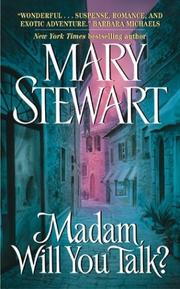
Madam, Will You Talk?
By Unknown Author
Widow Charity Selborne had been greatly looking forward to her driving holiday through France with her old friend Louise - long, leisurely days under the hot sun, enjoying the beauty of the parched Provencal landscape. But when Charity arrived at a plush resort in the picturesque French resort town of Avignon, she had no way of knowing that she was to become the principal player in the last act of a strange and brutal tragedy. Most of it had already been played. There had been love--and lust--and revenge and fear and murder. Very soon her dreams turn into a nightmare, when by befriending a terrified boy and catching the attention of his enigmatic, possibly murderous father, Charity has inadvertently placed herself center stage. She becomes enmeshed in the schemes of a gang of murderers, one of them a man with whom she is rapidly falling in love... And now the killer, with blood enough on his hands, was waiting in the wings.
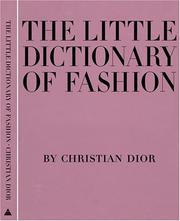
The Little Dictionary of Fashion
By Unknown Author
"Christian Dior reveals the secrets of style in this charming handbook that no woman should be without. An indispensable guide that covers everything from what to wear to a wedding and how to tie a scarf to how to walk with grace, The Little Dictionary of Fashion is full of timeless tips. From afternoon frocks and accessories to traveling and tweed, Dior's expertise ensures every girl will know the three fundamentals of fashion: simplicity, grooming, and good taste. Published for the Victoria and Albert Museum's Golden Age of Couture exhibition celebrating the 50th anniversary of Dior's "New Look" and illustrated with delightful photographs and drawings, this handbag-sized classic is the perfect gift for style-conscious women."--Publisher website.

Sweet Thursday
By Unknown Author
In Monterey, on the California coast, Sweet Thursday is what they call the day after Lousy Wednesday, which is one of those days that are just naturally bad. Returning to the scene of Cannery Row—the weedy lots and junk heaps and flophouses of Monterey, John Steinbeck once more brings to life the denizens of a netherworld of laughter and tears—from Fauna, new headmistress of the local brothel, to Hazel, a bum whose mother must have wanted a daughter.

The courage of Sarah Noble
By Unknown Author
An eight-year-old girl finds courage to go alone with her father to build a new home in the Connecticut wilderness, and to stay with the Indians when her father goes back to bring the rest of the family.

The group
By Unknown Author
THE GROUP follows eight graduates from exclusive Vassar College as they find love and heartbreak, forge careers, gossip and party in 1930s Manhattan. THE GROUP can be seen as the original SEX AND THE CITY. It is the first novel to frankly portray women's real lives, exploring subjects such as sex, contraception, motherhood and marriage.

Today's isms
By Unknown Author
Discusses the historical background, psychological roots, strengths, weaknesses, practices, evolution, and future of these political systems.
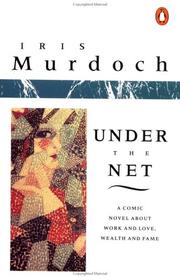
Under the net
By Unknown Author
Iris Murdoch's first novel.Iris Murdoch's first novel is a gem - solid and sparkling. Set in a part of London, where struggling writers rub shoulders with successful bookies, and film starlets with frantic philosophers. Its hero, Jake Donaghue, is a drifting, clever, likeable young man who makes a living out of translation work and sponging on his friends. Meeting again, after some years, an old flame, Anna, he is led into a series of fantastic adventures. Iris Murdoch has wit, great power of invention and a knack for producing absurd incidents with a serious undertone and tender episodes with an edge of satire. Robust, full of flavour and panache, here is one of those rare novels which equally make one laugh and make one think.
The wonderful flight to the Mushroom Planet
By Unknown Author
The adventures of Chuck and David, two boys who travel to the alien planet Basidium in their homemade spaceship.

Three Magic Words
By Unknown Author
The pages of Three Magic Words, you will learn of the unlimited power that is yours. You will learn how you can turn this power to work for you, here on earth, to make your life majestic and overflowing with good. Three Magic Words is not a religion or a sect or a society. In its entirety it is a series of essays aimed at revealing to you your power over all things. You will learn that there is only one mover in all creation and that mover is thought. You will learn that there is only one creator and that creator is the Universal Subconscious Mind, or God. You will learn that this creator creates for you exactly what you think, and you will be shown how you can control your thoughts, not only to obtain answers to your problems but to create in your experience exactly what you desire.
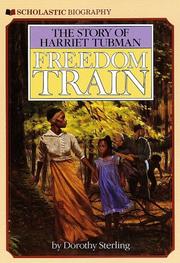
Freedom Train
By Unknown Author
Story of one of the most famous conductors in the Underground Railroad.
Grove's dictionary of music and musicians.
By Unknown Author
A notable work from 1954.

Maigret et la jeune morte
By Unknown Author
A notable work from 1954.
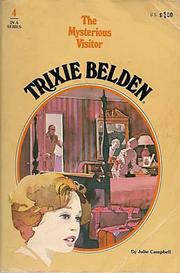
Trixie Belden and the mysterious visitor
By Unknown Author
Trixie Belden and Diana Lynch were friends for years before Di's family became fabulously rich. So when Di's long-lost uncle starts ruining her social life, Di turns to her old friend for help. But Trixie thinks Uncle Monty isn't just an annoying relative-she thinks he's an impostor!
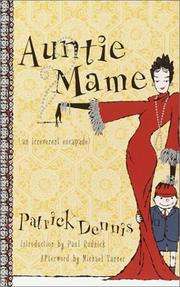
Auntie Mame
By Unknown Author
A notable work from 1954.
Mathematics and plausible reasoning
By Unknown Author
One of the best books to read about math and math education
The nature of prejudice
By Unknown Author
With profound insight into the complexities of the human experience, Harvard psychologist Gordon Allport organized a mass of research to produce a landmark study on the roots and nature of prejudice. First published in 1954, The Nature of Prejudice remains the standard work on discrimination. Allportʹs comprehensive and penetrating work examines all aspects of this age-old problem: its roots in individual and social psychology, its varieties of expression, its impact on the individuals and communities. He explores all kinds of prejudice-racial, religious, ethnic, economic and sexual-and offers suggestions for reducing the devastating effects of discrimination.
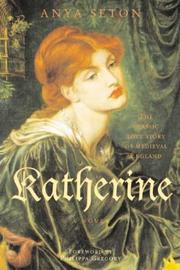
Katherine
By Unknown Author
Fictional account of the life of Katherine Swynford (de Roet) and John of Gaunt, Duke of Lancaster, the third surviving son of King Edward III. It is a love story between 2 people who have political marriages before they finally get married. Henry Tudor along with Elizabeth II are both descended from her. It is ranked in the top 100 books of its kind in England.
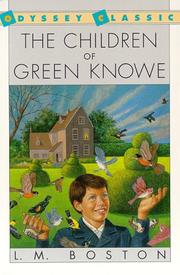
The children of Green Knowe
By Unknown Author
Tolly comes to live with his great-grandmother at the ancient house of Green Knowe and becomes friends with three children who lived there in the seventeenth century.

The wheel on the school
By Unknown Author
Six students in a tiny Dutch sea town engage practically the whole population in an effort to attract storks to nest on the town's roofs again.

Eine Frau in Berlin. Tagebuchaufzeichnungen vom 20. April bis 22. Juni 1945
By Unknown Author
April-May, 1945 Berlin-A Perilous Place For A Woman!, April 22, 2009 By Bernie Weisz "a historian specializing in the Vietnam War (Pembroke Pines,Florida) E mail:BernWei1@aol.com Written originally for Amazon.com April 22, 2009 This review is from: A Woman in Berlin: Eight Weeks in the Conquered City: A Diary (Paperback) The Diary "A Woman In Berlin 8 weeks In The Conquered City" was written by an anonymous author for obvious reasons. I like to use actual quotes that the author used to explain the meaning of this book, as this truly conveys without any "subjective idiosyncratic coloring" what the writer is actually trying to say. Basically, this anonymous author, kept a written diary for 8 weeks in 1945, as Berlin, Germany fell to the approaching Communist Russian Army from the East. The first entry was recorded on Friday, April 20th, 1945 and the final one came on Thursday, June 14th, 1945. Quite a bit of history occurred during these 8 weeks, of which the most significant was the suicide of Adolf Hitler on April 30th, 1945 and the subsequent unconditional surrender of Germany to both the Allies and the Soviets. This woman was alone in Berlin at the time and kept a daily record of her and her neighbor's experiences in an attempt to both keep her sanity and record the plight of millions of Germans who expected the wrath and revenge of the oncoming Soviets. With what I called "gallows humor", the anonymous author describes in detail her conditions in a ravaged apartment building and how it's little group of residents struggled to get by amongst falling Soviet shells, death and rubble, with severe conditions such as no food, heat and water. The author also describes vividly how her fellow apartment dwellers displayed character traits ranging from chivalry and protectionism to cravenness and corruption, depraved first by hunger and then by the Russians. The reader will in shocking and vivid detail find out about the shameful indignities to which women in a conquered city were unequivocally subjected to, i.e. the mass rape suffered by all, regardless of age, social class or infirmity. To give the author credit, she did maintain throughout this book her resilience, decency, and fierce will to come through Berlin's trial until normalcy and safety returned somewhat. This book was first published 8 years after Germany's surrender (1953), but with public sentiment to put the specter of the war behind the public's view, it quickly disappeared from libraries and bookstores, lingering in obscurity for decades before it slowly reemerged. After it's reissuance, it became an international phenomenon over half a century after it was written. The book's forward describes the amazing way this diary was written: "The author, a woman in Berlin, took meticulous note of everything that happened to her as well as her neighbors from late April to mid-June 1945-a time when Germany was defeated, Hitler committed suicide, and Berlin was occupied by the Red Army. While we cannot know whether the author kept the diary with eventual publication in mind, it's clear that the "private scribblings" she jotted down in 3 notebooks (and a few hastily added slips of paper) served primarily to help her maintain a remnant of sanity in a world of havoc and moral breakdown. Crimes of War 2.0: What the Public Should Know (Revised and Expanded) The earliest entries were literally notes from the underground, recorded in a basement where the author sought shelter from air raids, artillery fire, looters, and ultimately rape by the victorious Russians. With nothing but a pencil stub, writing by candlelight since Berlin had no electricity, she recorded her observations, which were at first severely limited by her confinement in the basement and dearth of information. In the absence of newspapers, radio, and telephones, rumor was the sole source of news about the outside world. As a semblence of normalicy returned to the city, the author expanded her view, and began reporting on the life of her building, then of her street, then on the forced labor she had to perform and her encounters in other neighborhoods. Beginning in July, 1945, when a more permanent order was restored, she was able to copy the contents of her three notebooks on a typewriter". Ther result was this book I am reviewing. While it is obvious that the author was an experienced journalist prior to the war (her verbiage, syntax and ideation is not of an amateur), she mentions in the diary that before the war she had made several trips abroad as a reporter and had visited the Soviet Union, where she picked up a rudimentary knowledge of speaking Russian. This might have saved her life in dealing with the various Soviet soldiers she dealt with, was pillaged sexually by, and eventually turned the tables on by manipulating these Russians with "sex for food". Because of the multiple rapes, it is understood that this author choose to remain anonymous. However, the individual that translated this from German into English, Hans Magnus Enzensberger, wrote this interesting forward to his translation. Mr. Enzensberger wrote that the anonymous author: "met Kurt W. Marek, a journalist and critic who facilitated the publication of the diary. An editor at one of the first newspapers to appear in the new German state, he went to work for "Rowohlt", a major Hamburg publishing house. It was to Marek that the author entrusted her manuscript, agreeing to change the names of people in the book and eliminate certain revealing details. In 1954 Marek placed this version of the book with a publisher in the United States, where he had settled. Thus, "A Woman in Berlin" first appeared in English (in an earlier translation) and then in 7 other languages. It took more than 5 years for the German original to find a publisher and even then that company, "Helmut Kossodo" was not in Germany but in Switzerland. But German readers were obviously not ready to face some uncomfortable truths, and the book was met with either hostility or silence. One of the few critics who reviewed it complained about the author's "shameless immorality". German women were not supposed to talk about the reality of rape; and German men preferred not to be seen as impotent onlookers when the Russians claimed the spoils of war. Ivan's War: Life and Death in the Red Army, 1939-1945 According to the best estimates, more than 100,000 women were raped after the conquest of Berlin. The author's attitude was an aggravating factor:devoid of self-pity, with a clear-eyed view of her compatriot's behavior before and after the Nazi regime's collapse. Her book flew in the face of the reigning postwar compacency and amnesia. No wonder the diary was quickly relegated to obscurity. By the 1970's, the political climate had become more receptive, and photocopies of the text, which had long been out of print, began to circulate in Berlin among the radical students of 1968 and the burgeoning women's movement. By 1985, when I started my own publishing venture, I thought it was time to reprint "A Woman in Berlin", but the project turned out to be fraught with difficulty. The author could not be traced, the original publisher had disappeared, and it was not clear who held the copyright. Kurt Marek had died in 1971. On a hunch I contacted his widow, Hannelore, who knew the identity of the author. She also knew that the diarist did not wish to see her book reprinted while she was alive-an understandable reaction given the dismal way it was originally received. In 2001, Ms. Marek told me that the author had died and her book could now reappear. By then, Germany and Europe had undergone fundamental changes and all manner of repressed memories were reemerging. It was now possible to publish the diary in it's full, complete form for the first time and restore passages that had previously been excluded, either to avoid touching on delicate matters or to protect the privacy of people still alive". How do we know this diary is legitimate after the publishing of the fraudulent and fictitious "Last Letters from Stalingrad" was found to be fictitious 40 years after it's writing? And what about the scandal over the "fake Hitler diaries and the "David Irving Trial"? During the fall of Berlin in 1945, Anthony Beever, a preeminent historian, wrote his introduction in this book in regard to the authenticity of this diary. Mr. Beever wrote: "It is perhaps inevitable that in the absence of an author, some have raised doubts over the authenticity of the work, but experts on personal documents from the period have confirmed that the diary's transcript is original and completely genuine. Such questions are to be expected, however, particularly after the scandal over the fake Hitler diaries, and after the great bestseller of the 1950's "Last Letters From Stalingrad" was found to be fictitious more than forty years following it's initial appearance. On reading "A Woman in Berlin" for the first time in 1999, I instinctively compared my reactions to those I'd had to the Stalingrad letters, which had quite easily made me uneasy. They were too good to be true. Yet any suspicions I might have had about "A Woman in Berlin" were soon discarded. The truth lay in the mass of closely observed detail. The anonymous diarist possessed an eye so consistent and authentic that even the most imaginative forger would never have been able to reproduce her visions of events. Just as importantly, other written and oral accounts that I have accumulated during my own research into the events in Berlin attest to the truth of the world she describes". I can, by personal experience attest to this. My father was in Germany in June, 1945 in the British sector of Allied-controlled Berlin. His name was David Weisz. He had met Soviet troops roaming and plundering from the prostate German citizenry. My father keenly noticed that a Soviet soldier would steal before anything else a wristwatch off a person, dead or alive. He had seen Soviet soldiers with wristwatches, 5 or 6 at a time, on a Russian's arms and ankles. My father passed away in 1984, and, while bizarre, I had forgotten that story until I read a passage in "A Woman in Berlin". The anonymous author noted about the Russian conquerors: "They keep pulling out their watches, comparing the time, the Moscow time they brought with them, which is an hour ahead of ours. One of the men has a thick old turnup of a watch, an East Prussian brand, with a shiny yellow, highly concave dial. Why are they so fixated on watches? It's not because of the monetary value;they don't ogle rings and earrings and bracelets the same way at all. They'll overlook them if they can lay their hands on another watch. It's probably because in their country watches aren't available for just anyone and haven't been in a long time. You have to really be somebody before you can get a wristwatch, that is, before the state allots you something so coveted. And now, they're springing up like radishes ripe for the picking, in undrempt-of abundance. With every new watch, the owner feels an increase in power. With every watch he can present or give away back home, his status rises. That must be it. Because they can't distinguish between a cheap watch and an expensive one. They prefer the ones with bells and whistles-stopwatches or a revolving face beneath a metal case. A gaudy picture on the dial also attracts them". I am convinced that the only way this author would know what my father told me 25 years ago was because she was there! There are many pearls of history dropped in this book, such as the various situations in which the author and her fellow female associates were raped and the circumstances surrounding it. Furthermore, the reaction of the author and her contemporaries to the defeat of Nazism, the suicide of Ava Braun and Hitler, the institution of the Soviet economy and the way the Soviets in the initial months of occupation carted off all usable machinery and industrial capability back to the Soviet Union by railroad are all chronicled and discussed. There is one glaring defect that I noted the author left out. Of course, the vanquished Nazi leaders were punished at the Nuremburg Trials of 1947. What happened to all the perpetuators of the mass rapes? Obviously, it will never be possible to calculate the exact number of rape victims in 1945. Anthony Beever believes: "A general estimate given is 2 million German women; this figure excludes Polish women and even Soviet women and girls brought to Germany for slave labor by the Wehrmacht. But the figures for Berlin are probably the most reliable of all of Germany-between 95,000 and 130,000, according to two leading hospitals. In another study by the "Crimes of War Project", it is noted: " The history of the twentieth-century warfare has shown, though, how little formal and customary laws of war have been observed-and how rarely they have been enforced. The Soviet Army raped its way across Prussia and into Berlin in the final days of W.W. II, yet Moscow's military judges took a victor's place of honor on the bench at Nuremberg. In fact, the founding statute of the International Military Tribunal in Nuremburg made no specific reference to rape, relying on language prohibiting inhumane treatment to encompass rapes committed by Nazi's". Nuremburg Trials Transcripts Volume 5 - Trial of the War Criminals International TribunalThe author did not address culpability for the sexual violations of herself or others. However, Anthony Beever did. He offered this explanation. Beever reflected: "One of the most important aspects of this diary is it's careful and honest reflection on rape in war. The whole subject of mass rape in war is hugely controversial. Some social historians argue that rape is a strategy of war and that the act itself is one of violence, not sex. Neither of these theories is supported by events in Germany in 1945. There have indeed been cases of rape being used as a terror tactic in war-the Spanish civil War and Bosnia are two clear examples. But no documents from the Soviet archives indicates anything of the sort in 1945. Stalin was merely amused by the idea of Red Army soldiers having "some fun" after a hard war. Meanwhile, loyal Communists and commissars were taken aback and embarrassed by the mass rapes. One commissar wrote that the Soviet propaganda of hatred had clearly not worked as intended. It should have instilled in Soviet soldiers a sense of disgust at the idea of having sex with a German woman. The argument that rape has more to do with violence than sex is a victim's definition of the crime, not a full explanation of male motive. Certainly, the rapes committed in 1945-against old women, young women even barely pubescent girls-were acts of violence, an expression of revenge and hatred. But not all of the soldier's anger came in response to atrocities committed by the Wehrmacht and the SS in the Soviet union. Many soldiers had been so humiliated by their own officers and commissars during the four years of war that they felt driven to make amends for their bitterness, and German women presented the easiest target. Polish women and female slave laborers in Germany also suffered. More pertinent, Russian psychiatrists have written of the brutal "barracks eroticism" created by Stalinist sexual repression during the 1930's (which may also explain why Soviet soldiers seemed to need to get drunk before attacking their victims). Most important, by the time the Red Army reached Berlin, eyewitness accounts show that revenge and indiscriminate violence were no longer the primary factors. Red Army soldiers selected their victims more carefully, shining torches in the faces of women in the air-raid shelters and cellars to find the most attractive. A third stage then developed, which the diarist also describes, where German women developed informal agreements with a particular soldier or officer, who would protect them from other rapists and feed them in return for sexual compliance. A few of these relationships even developed into something deeper, much to the dismay of the Soviet authorities and the outrage of wives at home". Finally, while there was a smattering of resentment by the author toward the Nazi's for leaving Germany in total ruins, it was not at the level of anger I thought it would be. Regardless, this story was a priceless microcosm of the senseless fallout and destruction caused by the fury of the Second World War that inevitably touched the undeserved, the weak, the old and the unprotected. Rape can never be justified as a part of warfare regardless of the situation at large, and stricter laws and sanctions must be enacted to enforce this for the future. This book taught me events and occurrences of W.W. II that rarely are mentioned in any history book!

Half Magic (Tales of Magic #1)
By Unknown Author
It all begins when Jane finds a strange coin on a sun-warmed sidewalk. And because she and her siblings are having the worst, most dreadfully boring summer ever, she idly wishes something exciting would happen. And something *does*: Her wish is granted. Or not quite. Only half her wish comes true. It turns out the coin grants wishes—but only by half, so that you must wish for *twice* as much as you want. Wishing for two times something is a cinch, but other doubled wishes only cause twice as much trouble. What is half of twice a talking cat? Or to be half-again twice not-here? And how do you double your most heartfelt wish, the one you care about so much it must be perfect?
Art and visual perception
By Unknown Author
Since its first publication in 1954, this work has established itself as a unique classic. It applies the approaches and findings of modern psychology to the study of art: it describes the visual process that takes place when people create- or look at- works in the various arts, and explains how the eye organizes visual material according to definite psychological laws. Fresh in thought, clean in style, this book is a highly readable contribution to the study of aesthetics. It could be recommended as an excellent introduction to the psychology of perception, however, it is the art lover, whether psychologist or not, who will find this book the most rewarding. -- from Book Jacket.
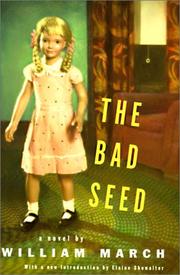
The Bad Seed
By Unknown Author
A notable work from 1954.
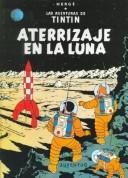
On a marché sur la Lune
By Unknown Author
Tintín and his friends are involved in the first manned flight to the moon which proves perilous.

The wonder that was India
By Unknown Author
An account of Indian history from the beginnings of the Indus Valley civilisation up to mediaeval India, ending before the Mughal period. A comprehensive textbook for the beginner in Indian studies, its commentary on the Indian social, religious and administrative way during the subcontinent's formative years way is particularly engaging,

Five go to the Mystery Moor
By Unknown Author
Bleak and eerie, Mystery Moor is well known for its spooky atmosphere, but is there something really scary out there? The Famous Five are intrigued, but the unfriendly travellers camped on the moor aren't letting on. The gang risks treacherous conditions to follow them over the moor -- but what danger will they find at the end of their trail?

Good Work, Secret Seven
By Unknown Author
Peter and Janet are the only witnesses when a car is stolen! They saw the thieves, and now the whole of the Secret Seven are involved. But when they realise they're on the trail of a dangerous gang, the Seven don't feel quite so brave. Have they taken on too much this time?
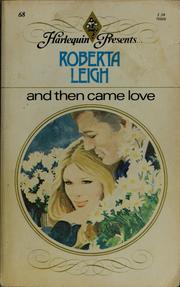
And then came love
By Unknown Author
They were an ill-assorted pair -- Stella Percy, cool, aloof lady of leisure, with every quality needed to live a life of luxurious elegance except money; and Matthew Armstrong, bluff, honest Yorkshire, who believed in calling a spade a spade, but had plenty of 'brass' which he was proud to think had all been earned by his own hard work. From the first he had made no secret of his attraction to Stella, and when she accepted his proposal she was at least honest enough to admit that it was for the sake of his money. So began their curious relationship. With so much honesty all round, it might well have succeeded -- and as Matthew had hoped, love might have grown between them eventually -- if Stella could only escape from the memory of Charles Heyward, the symbol of her former life.

Chemical engineering
By Unknown Author
Coulson and Richardson's classic series provides the student with an account of the fundamentals of chemical engineering and constitutes the definitive work on the subject for academics and practitioners. This volume covers the application of chemical engineering principles to the design of chemical processes and equipment. After an introductory chapter on the nature and methodology of the design process and its application to the design of chemical manufacturing processes - subsequent chapters cover process design and detail, safety and loss prevention, equipment selection, costings and flow sheets in depth. Later chapters cover the detailed design for equipment for separation processes and heat exchange. The mechanical design of process equipment is also included and a chapter on more general site considerations closes the book.
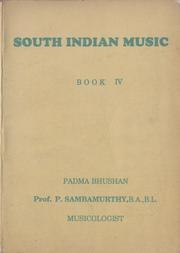
South Indian music
By Unknown Author
4th of the 6 volume treatise on Carnatic (South Indian) music. In this volume: Manodharma Sangitam (Pallavi, Svara Kalpana...), 22 srutis, Gamakas, Tala, musical forms, Kutcheri Dharmam, Comparative music, some Raga Lakshanas and Pallavis.
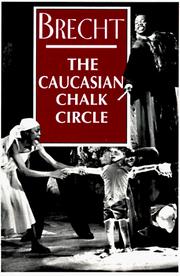
Der kaukasische Kreidekreis
By Unknown Author
"The Caucasian Chalk Circle is a parable inspired by the Chinese play Chalk Circle. Written at the close of World War II, the story is set in the Caucasus Mountains of Georgia, and retells the tale of King Solomon and a child claimed by two mothers. A chalk circle is metaphorically drawn around a society misdirected in its priorities. Brecht's statements about class are cloaked in the innocence of a fable that whispers insistently to the audience.". "Eric Bentley's English versions are widely viewed as the standard renderings of Brecht's work, ensuring that future readers will continue to come in close contact with this playwright who introduced a new way of thinking about the theater.". "Bertolt Brecht (1898-1956) is one of Germany's best-known playwrights. His social critiques, including The Good Woman of Setzuan, Mother Courage and Her Children, and The Threepenny Opera, resonate with modern audiences and continue to be frequently performed."--BOOK JACKET.

The Exploits of Sherlock Holmes
By Unknown Author
From the son of Sir Arthur Conan Doyle, and one of America's greatest mystery writers, John Dickson Carr, comes twelve riveting tales based on incidents or elements of the unsolved cases of Sherlock Holmes. The plots are all new, with painstaking attention to the mood, tone, and detail of the original stories. Here is a fascinating volume of mysteries for new Sherlock fans, as well as for those who have read all the classics and crave more! The Adventure of the Seven Clocks The Adventure of the Gold Hunter The Adventure of the Wax Gamblers The Adventure of the Highgate Miracle The Adventure of the Black Baronet The Adventure of the Sealed Room The Adventure of the Foulkes Rath The Adventure of the Abbas Ruby The Adventure of the Dark Angles The Adventure of the Two Women The Adventure of the Depthford Horror The Adventure of the Red Widow
Everyman
By Unknown Author
A notable work from 1954.

The Seed and the Sower
By Unknown Author
Twee Britse soldaten blikken terug op hun tijd in Japanse interneringskampen in Nederlands Indië.

The Alice B. Toklas Cook Book
By Unknown Author
A notable work from 1954.
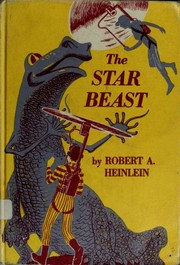
The star beast
By Unknown Author
Lummox had been the Stuart family pet for years. Though far from cuddly and rather large, it had always been obedient and docile. Except, that is, for the time it had eaten the secondhand Buick . . . But now, all of a sudden and without explanation, Lummox had begun chomping down on a variety of things — not least, a very mean dog and a cage of virtually indestructible steel. Incredible! John Thomas and Lummox were soon in awfully hot water, and they didn't know how to get out. And neither one really understood just how bad things were — or how bad the situation could get — until some space voyagers appeared and turned a far-from-ordinary family problem into an extraordinary confrontation.

Kilkenny
By Unknown Author
A notable work from 1954.

山の音
By Unknown Author
The anxieties and desires of an old man, Shingo, who lives with his family in a suburb of Tokyo, are shown. He hears "the sound of the mountain", the faint rumble in the hills that is a muffled hint of unknown occurrences and a foreboding of death. The affection he feels for his daughter-in-law, the increasing tensions of his relations with his wife, son and daughter are also muffled, yet disturbingly powerful.
Mary Anne
By Unknown Author
In Regency London, the only way for a woman to succeed is to beat men at their own game. So when Mary Anne Clarke seeks an escape from her squalid surroundings in Bowling Inn Alley, she ventures first into the scurrilous world of the pamphleteers. Her personal charms are such, however, that before long she comes to the notice of the Duke of York. With her taste for luxury and power, Mary Anne, now a royal mistress, must aim higher. Her lofty connections allow her to establish a thriving trade in military commissions, provoking a scandal that rocks the government - and brings personal disgrace.

Gemeinsames Leben
By Unknown Author
The deep meaning of Christian community in life "underground" in Nazi Germany.

Nedjma
By Unknown Author
A notable work from 1954.
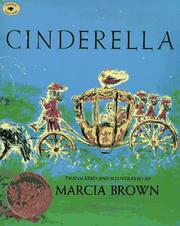
Cinderella
By Unknown Author
A notable work from 1954.

Der schwarze Obelisk
By Unknown Author
A German veteran of World War I observes the changes of the early Twenties.

Zeit zu leben und Zeit zu sterben
By Unknown Author
A notable work from 1954.

Stiller
By Unknown Author
A notable work from 1954.

The process and effects of mass communication
By Unknown Author
this book entitled Introduction to mass communication and i am looking of the process and effects of mass communication is all about masscommunaication, the process of mass communication , the effects of mass communication, the mass media .

The Scarlet Slipper Mystery
By Unknown Author
Frank and Joe, the Hardy boys, solve a mystery involving a magician, American secret agents, and international spy ring, and a Scottish castle.
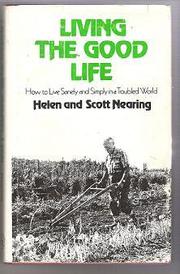
Living the good life
By Unknown Author
Describes the twenty years the authors spent homesteading in the Green Mountains of Vermont.

The Little Engine That Could
By Unknown Author
When the other engines refuse, the Little Blue Engine tries to pull a stranded train full of toys and good food over the mountain. Introduces vocabulary, reading comprehension, rhyming, character identification.
Revised Penal Code
By Unknown Author
divided in 2 books, book 1 and 2

Children Of The Lens (Lensman Series, No 6)
By Unknown Author
Children of the Lens is the sixth and concluding volume of the six classic Lensman books, long recognized as the greatest space opera ever written. Twenty years have passed since the events portrayed in Second Stage Lensman. To Kimball Kinnison and his wife Clarrissa have been born five children Kit, the eldest, and two sets of twin sisters. These are the 'Children of the Lens' the offspring of uncounted generations of selected matings. The most capable, the most brilliant minds in the universe. Their job is the conclusion of the Boskonian war, and how they accomplish this end and gain ultimate victory makes up the greater part of the book.

Psychological testing
By Unknown Author
Syllabus

The Robot Novels
By Unknown Author
Two Robot novels: The Caves of Steel The Naked Sun

The art of eating
By Unknown Author
This book is the essence of M.F.K. Fisher, whose wit and fulsome opinions on food and those who produce it, comment upon it, and consume it are as apt today as they were several decades ago, when she composed them. Why did she choose food and hunger, she was asked, and she replied, 'When I write about hunger, I am really writing about love and the hunger for it, and warmth, and the love of it . . . and then the warmth and richness and fine reality of hunger satisfied.' Includes five of her most popular works: Serve It Forth (1937) Consider the Oyster (1941) How to Cook a Wolf (1942) The Gastronomical Me (1943) An Alphabet of Gourmets (1949)

Mission of gravity
By Unknown Author
From back cover Del Rey paperback January 1978: CAPTAIN COURAGEOUS For a profit -- and adventure -- Barlennan would sail the Bree thousands of miles across uncharted waters, into regions where gravity itself played strange tricks. He would dare the perils of strange tribes and strange creatures -- even dicker with those strange aliens from beyond the skies, though the concept of another world was unknown to the inhabitants of Mesklin. But in spite of the incredible technology of the strangers and without regard for their enourmous size, Barlennan had the notion of turning the deal to an unsuspected advantage for himself... all in all a considerable enterprise for a being very much resembling a fifteen-inch caterpillar!
The fifty-minute hour
By Unknown Author
A notable work from 1954.
Shiosai
By Unknown Author
A notable work from 1954.
The portable Nietzsche
By Unknown Author
Selections from the books, notes, and letters of this 19th century philosopher.

Mrs. Piggle-Wiggle's Farm (Mrs. Piggle-Wiggle #3)
By Unknown Author
Mrs. Piggle-Wiggle is back with special cures for the not truthful, the pet forgetter, the fraidy-cat, the destructive child, and the child who continually says, "I can't find it.".

Love of Seven Dolls
By Unknown Author
This is the expanded novella of a story by Mr. Gallico titled, The Man Who Hated People. It was published in the Saturday Evening Post in the October 28, 1950 issue. The short story differs from this novella. The story (available to read here http://kukla.tv/manwho.html) tells the tale of Milly Maynard, a young woman who appears on the Peter and Panda show, a popular children's television show, on which she talks to six puppet characters. The puppets are Peter (a leprechaun), Panda (a fat panda), Arthur (a raffish crocodile), Mme. Robineau (a French lady), Doctor Henderson (a stuffy penguin), and Mr. Tootenheimer (an elderly toymaker). It's also about the love/hate relationship the girl has with the disfigured puppet-master, a former hockey player whose face was scarred after accidents on the ice. The story and the novella along with the film, Lili, became the basis for Carnival, the Broadway musical. Carnival is a musical, originally produced by David Merrick on Broadway in 1961, with the book by Michael Stewart and music and lyrics by Bob Merrill. It starred Anna Maria Alberghetti and was directed by Gower Champion. The actors Jerry Orbach and Kaye Ballard were also in the original Broadway cast. The book is available at various book sites on the Internet but a physical copy of the book is difficult to find from a library, even using WorldCat. Most of the copies are in Australia or England. The scanned copy here at Internet Archive/Open Library is the only easily accessible copy I could find. The following synopsis comes from the original Kirkus review published on November 4, 1954 (see link) and you can see how the plot and location of the short story has changed. "Paris and the rural byways of France form the setting for the story of ""Mouche"", a 22-year old orphan, adrift and jobless in a Paris spring. Movie goers will have seen the screen version of her rescue by a troupe of puppets, of her strange adventure in the land of half truth, grim and unpalatable, and half make believe. The show, with a naive girl and effectively operated puppets who seem truly to have their independent beings, becomes a rural sensation. But the puppeteer keeps out of public view -- and in his private life seems cruel, malicious, hard and cynical. It is only when Mouche -- at the end of the season- promises to marry a trapeze artist in the show, that he finds a way to make her see that he is the composite of all the puppet characters she has come to love." This synopsis is from Google Books (see link). "A lonely Parisian waif becomes emotionally involved with a street puppet show and the evil puppeteer. Her belief in the life of these dolls finally brings fame and happiness." This synopsis is from Amazon (see link). "In postwar Paris, Mouche, a young woman who has lost her job with a carnival, is persuaded not to commit suicide by the cheerful puppets of Captain Coq, a gruff puppeteer" This more complete synopsis comes from a Web site, Fleur in Her World, written by a woman named Jane who lives on the Cornish coast in England (see link). "The story opens on the banks of the Seine where a young girl, Mouche, is planning to throw herself in. Why? The war left Mouche an orphan. She dreamed of the stage and so she worked and save until she could come to Paris. But she found that she had neither the talent nor the looks needed to succeed. She looked like the simple country girl she was. And so she found herself at the age of twenty-two with no money, no home, and no friends to help her. Paul Gallico, as ever the consummate storyteller, sets the scene perfectly. “Hello there, you with the suitcase! Where are you going and what’s your hurry?” “It’s cold at the bottom of the river, little one, and the eels and crayfish eat your flesh.” “What’s the big tragedy? Your boyfriend give you the air? There’s plenty more fish in the sea.” “Well? Cat got your tongue? Speak up when you’re spoken to.” Who called Mouche back? At first all that she could see was an empty puppet booth with a sign announcing “Captaine Coq et sa Famille.” Then she saw a puppet. She would see seven, they all came out to see what was going on and to talk to Mouche. First would be Carrot Top, careworn and caring manager of the show. Later there would be Dr Duclos, a pompous penguin. Mr Reynardo the scallywag fox, a loveable rogue… It was magical and it was real. Seven puppet with characteristics so human that you could forget what they were. Mouche was caught up. She had found friends, and she had found the warmth and magic of theatre of her dreams. such a contrast from the world she had wanted to escape minutes before. She quite forgot that there was a man behind the theatre working the puppets. A crowd gathered to watch the interplay between girl and puppets. They were charmed, and so was I. The girl joined the show. But what of the puppeteer? The man who created such wonderful characters. He was an orphan like Mouche, but he was a troubled and unhappy man who would ill treat his new protegé and the young boy who worked for him? How can you reconcile the character of the man and the characters of his creations? How can Mouche reconcile her love for the seven puppets and her distaste for the man who brought them to life? A wonderful story unfolds, and a resolution seems impossible, but then Paul Gallico brings the story to a conclusion that is unexpected but entirely right. Along the way is joy, pain, and so many wonderful things are said about life, love, and the simple truths that are so important. Love of Seven Dolls is both charming and utterly moving. There is so much I more could say about this book, but I won’t ramble and I will add just three more words: read this book!"

Ideas and opinions
By Unknown Author
Here is a new edition of the most definitive collection of Albert Einstein's popular writings, gathered under the supervision of Einstein himself. The selections range from his earliest days as a theoretical physicist to his death in 1955; from such subjects as relativity, nuclear war or peace, and religion and science, to human rights, economics, and government.
My life in the Bush of Ghosts
By Unknown Author
The adventures of an African boy who strays into the world of the dead where his is lost for twenty-four years. Incorporates many unrecorded African myths.
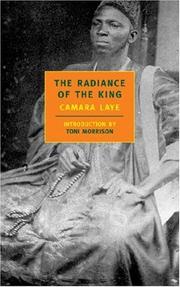
Le regard du roi
By Unknown Author
"At the beginning of this book, a masterpiece of African literature, Clarence, a white man, has been shipwrecked and stranded on the coast of Africa. Brimful of self-importance, he demands to see the king, but the king has just left for the south of his realm. Traveling through an increasingly phantasmagoric landscape in the company of a beggar and two roguish boys, Clarence is slowly stripped of his pretensions, until he is sold as a slave to the royal harem. But in the end Clarence's bewildering journey is the occasion of a revelation, as he discovers the image, both shameful and beautiful, of his own strange humanity in the alien figure of the king."--BOOK JACKET.

Islam
By Unknown Author
A notable work from 1954.
Special Senate investigation on charges and countercharges involving
By Unknown Author
A notable work from 1954.
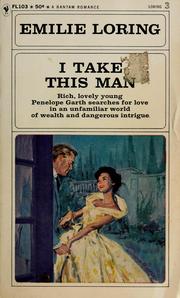
I Take This Man
By Unknown Author
A marriage made to save her mom and Penelope is put in a situation where she is torn between her husband and the man she thought she loved.
Utah Blaine
By Unknown Author
Colonel Utah Blaine, held captive by the Army of the Revolution, broke out of jail and headed north from Mexico with nothing but the clothes on his back. Then he found new trouble struggling at the end of a noose–and stepped in just in time to save the life of a Texas rancher. The would-be executioners were the rancher’s own men, looking to steal his land. Now Utah has a unique proposition: Have the wealthy Texan play dead, introduce himself as the spread’s new foreman, and take care of the outlaws one by one. The wage to fight another man’s war? A hundred a month plus expenses. The cost of falling in love while he earns that wage? It wasn’t exactly part of the original agreement, but Utah will soon find out–unless the bad guys get to him first.

The boys' first book of radio and electronics
By Unknown Author
Facts about electricity, radio waves, electrons and electronics with directions for building radio receivers and amplifiers and information on sending and receiving radio and telegraph signals.
Prose Edda
By Unknown Author
A notable work from 1954.

Crossfire trail
By Unknown Author
Rafe Caradec--gambler, wanderer, soldier of fortune--was as hard a man as the battlefields and waterfronts of Latin America could fashion, but he was as good as his word. As Charles Rodney lay dying in a dank ship's fo'c'sle, Rafe swore to make sure that Rodney's Wyoming ranch went to his daughter, Ann. In Painted Rock, Wyoming, Caradec found land for a man to love, miles of rolling grasslands and towering mountains. He also found that one of the most ruthless men in the territory had set his sights on both Rodney's ranch and his daughter. But Rafe Caradec had given his word, and once he'd looked deep into Ann Rodney's eyes, nothing short of death would stop him from keeping the promise he'd made.From the Paperback edition.
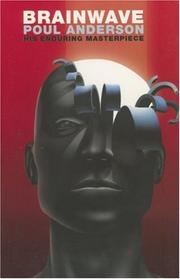
Brainwave
By Unknown Author
What if we're all designed to be smarter than we actually are? That is, in short, the premise of master science fiction novelist Poul Anderson's 1954 debut work, Brainwave. Unbeknownst to its inhabitants, the solar system has, for millions of years, been caught in a force field that has had the effect of suppressing intelligence. When, in the course of normal galactic movement the solar system finally breaks free of the force field and its inhibiting effects, a remarkable change begins to sweep across the earth. In fact, the entire world is turned upside-down, and Anderson's novel is devoted to detailing the sometimes-surprising, sometimes-chilling aftereffects of this watershed event. In one of the novel's opening scenes, Archie Brock, a mentally disabled man, finds himself suddenly awash in new kinds of thoughts as he looks up at the night sky. In another scene, a young boy on summer break works out the basic foundations of calculus before breakfast. Human life is dramatically transformed, as people with IQ's of 400 find themselves living within social structures and institutions designed for people of considerably less intelligence. There are also those who refuse to accept what has happened and band together to rebel against the new order. In another interesting twist, human relationships with other creatures on the planet are also thrown into upheaval, as animals rediscover their native intelligence. Archie Brock, for instance finds working on a farm with intelligent animals a frustrating, comic and confounding experience, as some animals band together and escape while others befriend their former masters.A fascinating "what if" novel, Brainwave is really an exploration into the ways human society is organized and the assumptions that are made about how life is valued. It is also a novel about equality and what happens when the hierarchical structures by which we arrange our daily lives disappear.

Death in High Heels
By Unknown Author
It all began with a dirty panama hat. How best to clean it? The sales staff at the exclusive salon, *Christophe et Cie*, finally decided on oxalic acid as the best method of removing the offending marks. They weren't to know it at the time, but it was also to prove the best method of murdering one of their colleagues. The unfortunate Miss Don had been in line for a plum job at the company's new branch in Deauville, and there had been considerable speculation as to whether she or the universally disliked Miss Gregory would be chosen. But shortly after learning that she would be the one to remain in London, Doon was to die an agonising death at the hands of a poisoner. Young Mr Charlesworth from Scotland Yard, a man uncomfortably susceptible to the charms of ladies, is called in to unravel this increasingly muddling and complex case, only to find his task further complicated by the fact that all his chief suspects are female! But before he has identified the culprit there is another poisoning ...

Christianity through the centuries
By Unknown Author
A notable work from 1954.