
Top Books of 1950
The most significant literary works published this year.
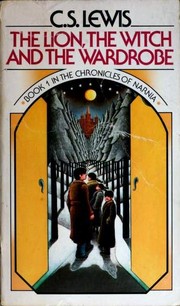
The Lion, the Witch and the Wardrobe
By C. S. Lewis
Four adventurous siblings—Peter, Susan, Edmund, and Lucy Pevensie—step through a wardrobe door and into the land of Narnia, a land frozen in eternal winter and enslaved by the power of the White Witch. But when almost all hope is lost, the return of the Great Lion, Aslan, signals a great change . . . and a great sacrifice. Journey into the land beyond the wardrobe! The Lion, the Witch and the Wardrobe is the second book in C. S. Lewis's classic fantasy series, which has been captivating readers of all ages for over sixty years. This is a stand-alone novel, but if you would like journey back to Narnia, read The Horse and His Boy, the third book in The Chronicles of Narnia. ([source][1]) [1]: http://www.cslewis.com/us/books/hardcover/the-lion-the-witch-and-the-wardrobe/9780060234812/ ---------- Also contained in: - [Chronicles of Narnia](https://openlibrary.org/works/OL70988W/The_Chronicles_of_Narnia) - [Tales of Narnia](https://openlibrary.org/works/OL71080W)
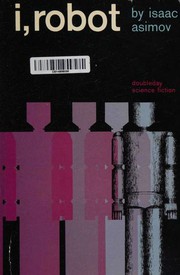
Les Robots
By Isaac Asimov
I, Robot is a fixup novel of science fiction short stories or essays by American writer Isaac Asimov. The stories originally appeared in the American magazines Super Science Stories and Astounding Science Fiction between 1940 and 1950 and were then compiled into a book for stand-alone publication by Gnome Press in 1950, in an initial edition of 5,000 copies. The stories are woven together by a framing narrative in which the fictional Dr. Susan Calvin tells each story to a reporter (who serves as the narrator) in the 21st century. Although the stories can be read separately, they share a theme of the interaction of humans, robots, and morality, and when combined they tell a larger story of Asimov's fictional history of robotics. ---------- Contains: "Introduction" "Robbie" (1940, 1950) "Runaround" (1942) "Reason" (1941) "Catch That Rabbit" (1944) "Liar!" (1941) "Little Lost Robot" (1947) "Escape!" (1945) "Evidence" (1946) "The Evitable Conflict" (1950)
The Return of the King
By J.R.R. Tolkien
THE RETURN OF THE KING, which brings to a close the great epic of war and adventure begun in The Fellowship of the Ring and continued in The Two Towers, is the third and final part of J. R. R. Tolkien's masterpiece, "The Lord of the Rings." In these three books, which form one continuous narrative, Tolkien created the saga of the Hobbits of Middle-earth and the great War of the Rings. Praised by such writers and poets as W. H. Auden, Richard Hughes and C. S. Lewis, "The Lord of the Rings" - that special world of beauty and terror and meaning - holds a secure place among the books that will live. ---------- **Also contained in:** - [The Lord of the Rings][1] [1]: https://openlibrary.org/works/OL27448W/The_Lord_of_the_Rings
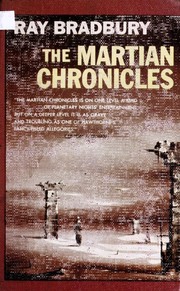
The Martian Chronicles
By Ray Bradbury
This is a collection of science fiction short stories, cleverly cobbled together to form a coherent and very readable novel about a future colonization of Mars. As the stories progress chronologically the author tells how the first humans colonized Mars, initially sharing the planet with a handful of Martians. When Earth is devastated by nuclear war the colony is left to fend for itself and the colonists determine to build a new Earth on Mars.

The Foundation Trilogy
By Isaac Asimov
- Foundation - Foundation and Empire - Second Foundation Isaac Asimov's Foundation novels are some of the great masterworks of science fiction. Unsurpassed for their unique blend of nonstop action, daring ideas, and extensive world-building, they chronicle the struggle of a courageous group of men and women working to preserve humanity’s light against an inexorable tide of darkness and violence. Led by its founding father, the great psychohistorian Hari Seldon, and taking advantage of its superior science and technology, the Foundation has survived the greed and barbarism of its neighboring warrior-planets. Yet now it must face the Empire—still the mightiest force in the Galaxy even in its death throes. When an ambitious general determined to restore the Empire’s glory turns the vast imperial fleet toward the Foundation, the only hope for the small planet of scholars and scientists lies in the prophecies of Hari Seldon. But not even Hari Seldon could have predicted the birth of the extraordinary creature called The Mule, a mutant intelligence with a power greater than a dozen battle fleets… a power that can turn the strongest-willed human into an obedient slave.
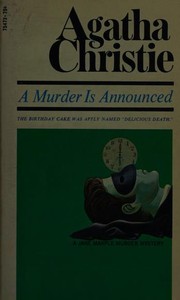
A Murder Is Announced
By Agatha Christie
The villagers of Chipping Cleghorn, including Jane Marple, are agog with curiosity over an advertisement in the local gazette which read: 'A murder is announced and will take place on Friday October 29th, at Little Paddocks at 6:30 p.m.' Unable to resist the mysterious invitation, a crowd begins to gather at Little Paddocks at the ppointed time when, without warning, the lights go out . . .
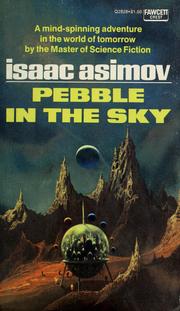
Pebble in the Sky
By Unknown Author
*Pebble in the Sky* is Asimov's first full length novel. It begins with a retired tailor from the mid-20th Century, who is accidentally pitched forward into the future. By then, Earth has become radioactive and is a low-status part of a vast Galactic Empire. There is both a mystery and a power-struggle, and a lot of debate and human choices. The originality of the S.F. work is the choice of a very ordinary man as the story's protagonist, rather than the more typical space opera hero.
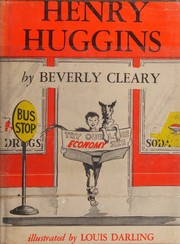
Henry Huggins
By Unknown Author
Henry Huggins is the first book in the Henry Huggins series of children's novels, written by Beverly Cleary. Henry is an ordinary boy who manages to get into funny scrapes with his dog, Ribsy. First published on September 6, 1950, it was originally illustrated by Louis Darling.
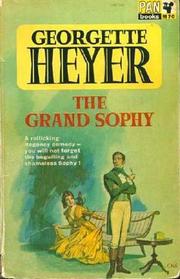
The Grand Sophy
By Unknown Author
When the redoubtable Sir Horace Stanton-Lacy is ordered to South America on business, he leaves his only daughter Sophia with his sister, Elizabeth Rivenhall, in Berkeley Square. Newly arrived from her tour of the Continent, Sophy invites herself into the circle of her relatives. When Lady Ombersley agrees to take in her young niece, no one expects Sophy, who sweeps in and immediately takes the ton by storm. Beautiful, gay, impulsive, shockingly direct, Sophy swept into elegant London society and scattered conventions and traditions before her like wisps in a windstorm. Resourceful, adventurous and utterly indefatigable, Sophy is hardly the mild-mannered girl that the Rivenhalls expect when they agree to take her in. Kind-hearted Aunt Lizzy is shocked, and her arrogant stern cousin Charles Rivenhall, the Ombersley heir, vows to rid his family of her meddlesome ways by marrying her off. But vibrant and irrepressible Sophy was no stranger to managing delicate situations. After all, she'd been keeping opportunistic females away from her widowed father for years. But staying with her relatives could be her biggest challenge yet. But Sophy discovers that her aunt's family is in desperate need of her talent for setting everything right: her aunt's husband is of no use at all, her ruthlessly handsome cousin Charles has tyrannical tendencies that are being aggravated by his pedantic bluestocking fiancee Eugenia Wraxton; her lovely cousin Cecelia was smitten with an utterly unsuitable suitor, a beautiful but feather-brained poet; her cousin Herbert was in dire financial straits and has fallen foul of a money-lender; and the younger children are in desperate need of some fun and freedom, and Sophy's arrived just in time to save them all. With her inimitable mixture of exuberance and grace Sophy became the mainstay of her hilariously bedeviled family, as a horsewoman, social leader and above all, as an ingenious match-maker. Using her signature unorthodox methods, Sophy set out to solve all of their problems. By the time she's done, Sophy has commandeered household and Charles's horses, but she finds herself increasingly drawn to her eldest cousin. Could it be that the Grand Sophy had finally met her match? Can she really be falling in love with him, and he with her? And what of his betrothal to grim Eugenia?

In Name Only
By Unknown Author
Jane Roberts had married Nicholas Hamilton because she loved him, yet knowing that his only reason for marrying her was that under the terms of his father's will he would be disinherited if he didn't. From such a bad beginning, and with the beautiful Carole Sheridan playing the part of "the other woman" to the hilt, how could Jane ever hope to make her marriage succeed?

King Rat
By Unknown Author
The time is World War II. The place is a brutal prison camp deep in Japanese-occupied territory. Here, within the seething mass of humanity, one man, an American corporal, seeks dominance over both captives and captors alike. His weapons are human courage, unblinking understanding of human weaknesses, and total willingness to exploit every opportunity to enlarge his power and corrupt or destroy anyone who stands in his path.From the Paperback edition.
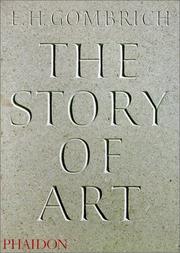
The story of art
By Unknown Author
The Story of Art, by E. H. Gombrich, is a survey of the history of art from ancient times to the modern era. First published in 1950 by Phaidon, the book is widely regarded both as a seminal work of criticism and as one of the most accessible introductions to the visual arts
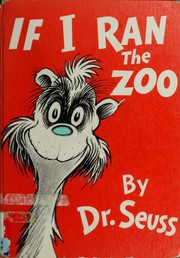
If I Ran the Zoo
By Unknown Author
Gerald McGrew imagines the myriad of animals he’d have in his very own zoo, and the adventures he’ll have to go on in order to gather them all. Featuring everything from a lion with ten feet to a Fizza-ma-Wizza-ma-Dill.

Welcome to the Monkey House
By Unknown Author
Welcome to the Monkey House is a collection of Kurt Vonnegut’s shorter works. Originally printed in publications as diverse as The Magazine of Fantasy and Science Fiction and The Atlantic Monthly, these superb stories share Vonnegut’s audacious sense of humor and extraordinary range of creative vision. Includes the following stories: “Where I Live” “Harrison Bergeron” “Who Am I This Time?” “Welcome to the Monkey House” “Long Walk to Forever” “The Foster Portfolio” “Miss Temptation” “All the King’s Horses” “Tom Edison’s Shaggy Dog” “New Dictionary” “Next Door” “More Stately Mansions” “The Hyannis Port Story” “D.P.” “Report on the Barnhouse Effect” “The Euphio Question” “Go Back to Your Precious Wife and Son” “Deer in the Works” “The Lie” “Unready to Wear” “The Kid Nobody Could Handle” “The Manned Missiles” “Epicac” “Adam” “Tomorrow and Tomorrow and Tomorrow” From randomhouse.com
A history of the English-speaking peoples
By Unknown Author
Sketches of sixteen of Churchill's favorite historical characters selected from his four-volume A history of the English-speaking Peoples, followed by a profile of Sir Winston drawn from autobiographical writings and speeches.
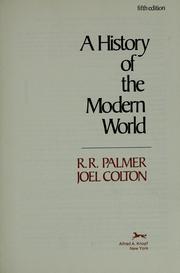
A history of the modern world
By Unknown Author
Conceived and written as a history of the modern world rather than a truncated Western Civilization book, this text is one of the most highly praised history texts ever published. It has been adopted at more than 1000 schools and has been translated into six languages. Lloyd Kramer joins the author team for this ninth edition that includes two new color inserts highlighting fine art, additional pedagogy to guide students through challenging material, and full, up-to-date inclusion of current events. First published in 1950, translated into six languages, is used in more than 1,000 colleges and universities as well as many high school advanced placement courses. The second edition (1956), comprises two volumes, 20 main chapters and 110 sub-chapters. The author focuses on World History from a European perspective, and the newer editions also exists under the title "A History of Europe in the Modern World". First book The Ancient Greece to 1848 Chapter 1 - Birth of Europe 1. Ancient Greece, Rome and Christianity, p. 3 2. Early Middle Ages, Forming of Europe, p. 10 3. High Middle Ages, Profane culture, p. 18 4. High Middle Ages, the Church, p. 29 Chapter 2 - The Upheaval within the Christian Church 1300 - 1560 5. Decay of the Church, p. 39 6. The Renaissance in Italy, p. 44 7. The Renaissance outside Italy, p. 52 8. The new Monarchies, p. 54 9. Protestantism, p. 60 10. Catholic reformation and restructure, p. 73 Chapter 3 - The Religious Wars 1560 - 1648 11. Opening of the Atlantic Ocean, p. 81 12. The Commercial Revolution, p. 85 13. The Spanish Inquisition; the Dutch and the English, p. 95 14. France's decomposition and reconstruction, p. 104 15. The thirty-year war; Germany's decay, p. 111 Chapter 4 - Western Europe in Leadership Position 16. The Great Monarch and the Balance in Europe, p. 121 17. The Dutch Republic, p. 124 18. England: the Puritan Republic, p. 129 19. England: the Triumph of the Parliament, p. 136 20. Louis XIV's France 1643-1715; the Triumph of Absolutism, p. 142 21. Louis XIV's War; Treaty of Utrecht, p. 152 Chapter 5 - Transformation of Eastern Europe 1648 - 1740 22. Three aging values, p. 159 23. Arising of the Austrian Monarchy, p. 170 24. Origin of Prussia, p. 175 25. Russia's Transforming into Western Values, p. 175 26. Poland's divisions, p. 195 Chapter 6 - The Struggle for Wealth and Power 27. The World's Housekeeping during the 18th Century, p. 200 28. Western Europe after Utrecht, p. 209 29. The Big War in the middle of the 18th Century, p. 219 Chapter 7 - The Scientific perspective of the World 30. The Prophets of Scientific Culture - Bacon and Descartes, p. 234 31. The Road to Newton: Law of Gravitation, p. 239 32. Expanded Knowledge of the Human Being and Society, p. 247 33. Political Theory: the Natural Law School, p. 254 Chapter 8 - Age of Enlightenment 34. "The Philosophers", p. 261 35. Enlightened Despotism, France, Austria, Pussia, p. 272 36. Enlightened Despotism, Russia, p. 282 37. The American Revolution, p. 289 Chapter 9 - The French Revolution 38. Preconditions, p. 303 39. The Revolution 1789, p. 307 40. The French Unity, p. 315 41. The Revolution and Europe: The War and the "second" revolution 1792, p. 320 42. The French Remodeling of Society, p. 315 43. Republican Crisis 1792-95: Reign of Terror, p. 325 44. The Despotic Republic 1799-1804, p. 337 Chapter 10 - The Napoleonic Europe 45. The Creation of the French Empire, p. 345 46. The large Empire: the Propagation of the Revolution, p. 354 47. The Continental System: Britain and Europe, p. 359 48. The National Movements: Germany, p. 364 49. Napoleon defeated: The Vienna Congress, p. 372 Chapter 11 - Reaction versus progress 1815 - 1848 50. The Industrial Revolution, p. 384 51. Origin of the new Ideologies, p. 391 52. The Dam of the River: Domestic Politics, p. 403 53. The Breakthrough of Liberalism in the West: The Revolutions 1830-32, p. 413 54. The triumph of Western Bourgeois, p. 423 Second book The 1848 Revolutions to the Second World War and its aftermath Chapter 12 - 1848: An interrupted Revolution 56: Paris: the Ghost of Western Social Revolutions, p. 2 57: Vienna: the National Revolution in Central Europe, p. 9 58: Frankfurt and Berlin: the Question of a Liberal Europe, p. 17 59: The Consequences of the 1848 Revolutions: the hard Objectivity, p. 24 60: Birth of Marxism, p. 27 61: Bonaparteism: The Second French Empire 1852-70, p. 33 Chapter 13 - Consolidation of the large Countries 62: Background: the idea of National States, p. 39 63: Cavour and the Italian War 1859: Italy's Unification, p. 42 64: Bismarck: the Foundation of the German Empire, p. 47 65: The Double Monarchy Austria-Hungary, p. 56 66: Liberalisation of Tsar-Russia: Alexander II, p. 60 67: United States: The Civil War, p. 65 68: Dominion Canada 1867, p. 71 69: Japan versus the West, p. 74 Chapter 14 - The European Civilization 1871-1914 70: "The Civilized World", p. 82 71: Demographic Basics: The Growth of the European Population, p. 84 72: The World's Housekeeping during the 19th Century, p. 92 73: Democracy's progress: Third French Republic, United Kingdom of Great Britain and Ireland, German Empire, p. 100 74: Democracy's progress: Socialism and Worker's Unions, p. 112 75: Science, Philosophy and Religion, p. 119 76: The Extinction of Classic Liberalism, p. 129 Chapter 15 - The European World Domination 77: Imperialism: its Nature and Reasons, p. 137 78: America, p. 144 79: The Dissolution of the Ottoman Empire, p. 149 80: Africa's division, p. 157 81: Imperialism in Asia: the Dutch, the British and the Russians, p. 164 82: Imperialism in Asia: China and the West, p. 168 83: The Russian-Japanese war, p. 172 Chapter 16 - World War One 84: The International Anarchy, p. 175 85: The Battle of Marne and the new Countenance of the War, p. 184 86: Stalemate 1915-1916, the Navy, the Army, Diplomacy, p. 186 87: The Russian Collapse and the United States' intervention, p. 194 88: The Collapse of the Austrian and German Empires, p. 200 89: The War's Economical and Social Effects, p. 202 90: The Peace in Paris 1919, p. 206 Chapter 17 - The Russian Revolution 91: Background, p. 216 92: The 1905 Revolution, p. 224 93: The 1917 Revolution, p. 229 94: The Union of the Socialist Soviet Republics, p. 237 95: Stalin: the Five Year Plans and the Cleansings, p. 244 96: The International Effects of Communism, p. 254 Chapter 18 - The apparent victory of democracy 97: Democracy's advancement and the New Deal, p. 260 98: The German Republic and the Spirit of Locarno, p. 265 99: Asia's Revolt, p. 272 100: The Great Depression: Collapse of the World's Housekeeping, p. 284 Chapter 19 - Democracy and Dictatorship 101: The United States: Depression and the New Deal, p. 292 102: Stress and Adaptation for the British and French Democracies, p. 297 103: Totalitarianism: The Italian Fascism, p. 306 104: Totalitarianism: Germany's Third Reich, p. 311 105: Weakness of the West: Against a New War, p. 323 Chapter 20 - The Earthquake: The Second World War and its Aftermath 106: The Axis Powers' Triumphs, p. 333 107: The Western Powers' and Soviet Union's Victories, p. 341 108: Restructure and Revolution in Europe and Asia after the War, p. 349 109: The Democracies After 1945, p. 358 110: Two Worlds at Conflict, p. 368
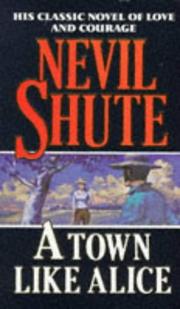
A town like Alice
By Unknown Author
Nevil Shute's most beloved novel, a tale of love and war, follows its enterprising heroine from the Malayan jungle during World War II to the rugged Australian outback. Jean Paget, a young Englishwoman living in Malaya, is captured by the invading Japanese and forced on a brutal seven-month death march with dozens of other women and children. A few years after the war, Jean is back in England, the nightmare behind her. However, an unexpected inheritance inspires her to return to Malaya to give something back to the villagers who saved her life. Jean's travels leads her to a desolate Australian outpost called Willstown, where she finds a challenge that will draw on all the resourcefulness and spirit that carried her through her war-time ordeals.

The Dharma Bums
By Unknown Author
The Dharma Bums is a 1958 novel by Beat Generation author Jack Kerouac. The basis for the novel's semi-fictional accounts are events occurring years after the events of On the Road. The main characters are the narrator Ray Smith, based on Kerouac, and Japhy Ryder, based on the poet and essayist Gary Snyder, who was instrumental in Kerouac's introduction to Buddhism in the mid-1950s. The book concerns duality in Kerouac's life and ideals, examining the relationship of the outdoors, mountaineering, hiking, and hitchhiking through the west US with his "city life" of jazz clubs, poetry readings, and drunken parties. The protagonist's search for a "Buddhist" context to his experiences (and those of others he encounters) recurs throughout the story. The book had a significant influence on the Hippie counterculture of the 1960s.
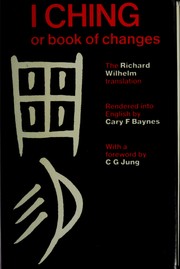
I Ching
By Unknown Author
A translation of the early document of Chinese philosophy with explanatory notes.
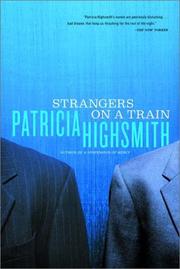
Strangers On a Train
By Unknown Author
The world of Patricia Highsmith has always been filled with ordinary people, all of whom are capable of very ordinary crimes. This theme was present from the beginning, when her debut, Strangers on a Train, galvanized the reading public. Here we encounter Guy Haines and Charles Anthony Bruno, passengers on the same train. But while Guy is a successful architect in the midst of a divorce, Bruno turns out to be a sadistic psychopath who manipulates Guy into swapping murders with him. "Some people are better off dead," Bruno remarks, "like your wife and my father, for instance." As Bruno carries out his twisted plan, Guy is trapped in Highsmith's perilous world, where, under the right circumstances, anybody is capable of murder.
Principles of internal medicine
By Unknown Author
This book is a treatise on all disorders & treatments in medicine. It is an authoritative & exhaustive book..basically a Bible for students of medicine. Each topic is authored by an expert in the field.It was first written & edited by Dr Harrison & Later By Dr Eugene Brunwald,Dr Isselbacher, Dr Fausi, Dr Kasper & other luminaries in the medical field. The more recent editions have been supplimented by a CD ROM with videos of examination & various test procedures which helps a physician to arrive at a diagnosis & treat the patient.
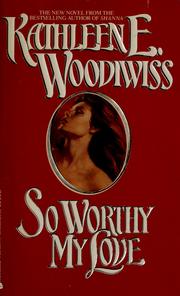
So Worthy My Love
By Unknown Author
Lord Maxim Seymour swears revenge on those who stole his title and his lands, but when he mistakenly abducts Elise Radborne he finds himself caught between the dangerous intrigues of the Elizabethan court and his witty, sensual captive.Maxim Proud and passionate, the Marquess of Bradbury swore vengeance on those who had stolen his title and lands. . .and branded him a traitor to the Crown.EliseBeautiful and spirited, she found herself the innocent prisoner of the marquess, her family's most hated foe.So Worthy My LoveThey were bitter enemies caught in a dangerous tide that swept through Elizabeth's England--And thus began a battle of wit and will between two people so perfectly matched that they could only fall in love.
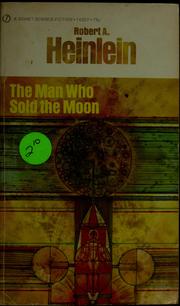
The man who sold the moon
By Unknown Author
In 1949, Heinlein wrote this story about an entrepreneur who foresaw that future of manned space flight could not be left to governments. His protagonist, D.D. Harriman, risked his reputation, his fortune and his very life to make his dream a reality. The prescience of Heinlein's tale is embodied in a modern-day entrepreneur, who looks beyond the moon to Mars. The future of humans in space cannot be trusted to governments, whose inefficiencies would make it impossible. Though almost seventy years old, this story is more pertinent today than ever.
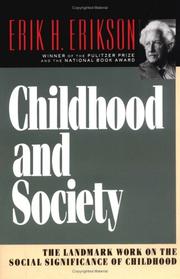
Childhood and society
By Unknown Author
The original and vastly influential ideas of Erik H. Erikson underlie much of our understanding of human development. His insights into the interdependence of the individual's growth and historical change, his now-famous concepts of identity, growth, and the life cycle, have changed the way we perceive ourselves and society. Widely read and cited, his works have won numerous awards including the Pulitzer Prize and the National Book Award. Combining the insights of clinical psychoanalysis with a new approach to cultural anthropology, Childhood and Society deals with the relationships between childhood training and cultural accomplishment, analyzing the infantile and the mature, the modern and the archaic elements in human motivation. It was hailed upon its first publication as "a rare and living combination of European and American thought in the human sciences" (Margaret Mead, The American Scholar). Translated into numerous foreign languages, it has gone on to become a classic in the study of the social significance of childhood. - Back cover.
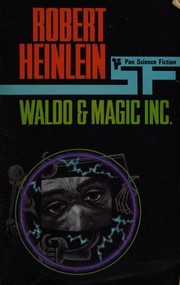
Waldo and Magic, Inc
By Unknown Author
Waldo: North Power-Air was in trouble. Their aircraft had begun to crash at an alarming rate, and no one could figure out what was going wrong. Desperate for an answer, they turned to Waldo, the crippled genius who lived in a zero-g home in orbit around Earth. But Waldo had little reason to want to help the rest of humanity -- until he learned that the solution to their problems also held the key to his own... Magic, Inc.: Under the guise of an agency for magicians, Magic, Inc. was systematically squeezing out the small independent magicians. Then one businessman stood firm. With the help of an Oxford-educated African shaman and a little old lady adept at black magic, he went straight to the demons of Hell to resolve the problem -- once and for all!
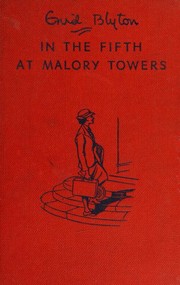
In the Fifth at Malory Towers
By Unknown Author
Games, lessons, quarrels and tricks all form part of a lively term, but the biggest event of all is the Fifth Form pantomime, written, acted and produced entirely by the girls. It generates a lot of fun, but also a surprising amount of trouble.
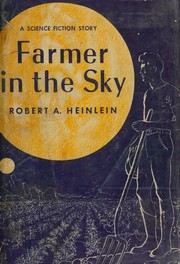
Farmer in the Sky
By Unknown Author
Farmer In The Sky is a 1950 science fiction novel by Robert A. Heinlein about a teenaged boy who emigrates with his family to Jupiter's moon Ganymede, which is in the process of being terraformed.

The Mystery of the Secret Room
By Unknown Author
During the Christmas holidays Pip discovers a room in Miss Crump's old empty house isn't empty at all -- someone has been using it! It's the perfect mystery for Fatty to put his new talent for disguises to use. Now it's up to Fatty and Pip along with Bets, Larry, Daisy and Buster the dog to find out who has been using Miss Crump's old house. The Find-Outers is a clever mystery series from bestselling author Enid Blyton, and perfect for fans of The Secret Seven.
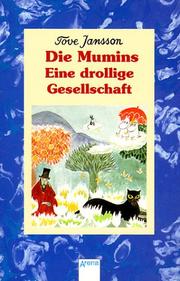
Trollkarlens hatt
By Unknown Author
Poor little chap! He had been turned into a very strange animal indeed . . .Although they're small, fat and shy creatures, Moomins have the most amazing adventures. It all begins when Moominpappa tries on a magic hat that makes exciting and funny things happen . . .

The Grass is Singing
By Unknown Author
like it

Dying Earth - Baen
By Unknown Author
A notable work from 1950.
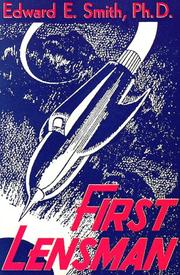
First Lensman
By Unknown Author
Lensman series, Book 2 of 7 In First Lensman, we find the benevolent super-beings of Arisia ready to bestow the first "lens" on a human being (which, among other things, will give humans telepathic powers). The honor goes to Virgil Samms, who will ever after be known as the "First Lensman." But it's a title that he'll have to earn by establishing the Galactic Patrol, a group that is at once powerful and incorruptible, and will protect the universe from the evil and almost-unstoppable Eddorians. If that weren't tough enough, Samms must also dodge assassination attempts at home and help his second-in-command, Rod "The Rock" Kinnison, win the presidency of North America. And that's just the beginning of his troubles.
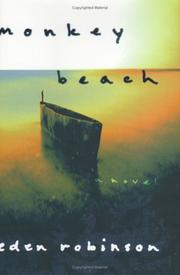
Monkey beach
By Unknown Author
"Five hundred miles north of Vancouver is Kitamaat, an Indian reservation in the homeland of the Haisla people. Growing up a tough, wild tomboy, swimming, fighting, and fishing in a remote village where the land slips into the green ocean on the edge of the world, Lisamarie has always been different. Visited by ghosts and shapeshifters, tormented by premonitions, she can't escape the sense that something terrible is waiting for her. She recounts her enchanted yet scarred life as she journeys by speedboat up the frigid waters of the Douglas Channel. She is searching for her brother, dead by drowning, and in her own way running as fast as she can toward danger.". "Circling her brother's tragic death are the remarkable characters that make up her family: Lisamarie's parents, struggling to join their Haisla heritage with Western ways; Uncle Mick, a Native rights activist and devoted Elvis fan; and the headstrong Ma-ma-oo (Haisla for "grandmother"), a guardian of tradition."--BOOK JACKET.
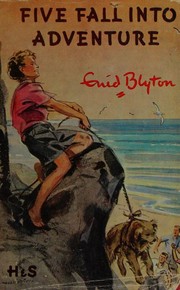
Five Fall into Adventure
By Unknown Author
In book nine, the Famous Five are really worried -- George and her devoted Timmy have disappeared. Not only that, somebody has broken into Kirrin Cottage. Could there be a connection?

Secret Seven Adventure
By Unknown Author
A priceless pearl necklace has been stolen, and the Secret Seven witnessed the thief making his escape. But where has he hidden the necklace?
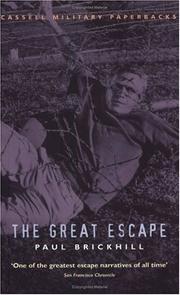
The Great Escape (Bull's-eye S.)
By Unknown Author
The famous story of mass escape from a WWII German PoW camp that inspired the classic filmOne of the most famous true stories from the last war, The Great Escape tells how more than six hundred men in a German prisoner-of-war camp worked together to achieve an extraordinary break-out. Every night for a year they dug tunnels. Those who weren't digging forged passports, drew maps, faked weapons or tailored German uniforms and civilian clothes to wear once they had escaped. All of this was conducted under the very noses of their prison guards. When the right night came, the actual escape itself was timed to the split second - but of course, not everything went according to plan.
Gormenghast
By Unknown Author
"Titus Groan is seven, Lord and heir to the crumbling castle Gormenghast. A gothic labyrinth of roofs and turrets, cloisters and corridors, stairwells and dungeons, it is also the cobwebbed kingdom of Byzantine government and age-old rituals, a world primed to implode beneath the weight of centuries of intrigue, treachery, and death. Steerpike, who began his climb across the roofs when Titus was born, is now ascending the spiral stairacse to the heart of the castle, and in his wake lie imprisonment, manipulation, and murder"--P. [4] of cover.

The Lonely Crowd
By Unknown Author
**The Lonely Crowd** is a 1950 sociological analysis by David Riesman, Nathan Glazer, and Reuel Denney. Together with White Collar: The American Middle Classes (1951), it is considered a landmark study of American character. (Source: [Wikipedia](https://en.wikipedia.org/wiki/The_Lonely_Crowd))

The Mystery of the Invisible Thief
By Unknown Author
Larry, Daisy, Fatty, Pip, Bets and Buster are immediately on the trail when two robberies take place in the village, and though the thief has left enormous footprints, it seems as if he is able to enter houses without being seen. ---------- ###German-language description: Am hellichten Tag wird in einem Haus in Peterswalde eingebrochen und man stellt fest, daß etliche Wertsachen fehlen. Der Dieb hinterließ am Tatort merkwürdige Spuren. Polizist "Wegda", frisch zurück vom Fortbildungskurs für Polizisten, will den Fall gleich mit seinem neu erworbenen Wissen lösen. Aber selbst seine tollsten Verkleidungskünste reichen nicht aus, den schlauen Tricks des unsichtbaren Diebes auf die Schliche zu kommen. Wie gut, dass die pfiffigen Spürnasen gerade Ferien haben …
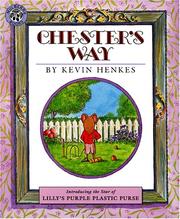
Chester's Way
By Unknown Author
Chester and Wilson share the same exact way of doing things, until Lilly moves into the neighborhood and shows them that new ways can be just as good.
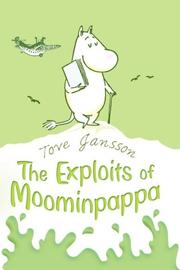
Muminpappans bravader / Muminpappans memoarer
By Unknown Author
When stricken with a severe cold, Moominpappa decides to set down an account of his eventful youth, which he shares chapter by chapter with Moomintroll, Sniff, and Snufkin.
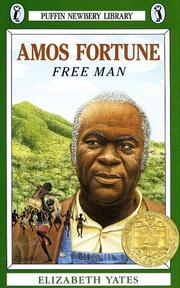
Amos Fortune, free man
By Unknown Author
The life of the eighteenth-century African prince who, after being captured by slave traders, was brought to Massachusetts where he was a slave until he was able to buy his freedom at the age of sixty.
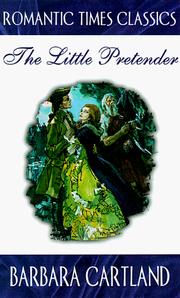
The Little Pretender
By Unknown Author
THE DIVIDED HEART 1750, Scottish Highlands. Four years after Bonnie Prince Charles had lost the battle of Culloden Moor, he and his friends are planning another Rising. The Duke of Arkrae, Chief of the Clan MacCraggan, is of great importance, owing to the strategic position of his territories. But where his sympathies lie is known neither to the Jacobites nor to the English. Iona a lovely 17-year-old red-haired ward of a Jacobite exile in Paris, agrees to impersonate the Duke's half-sister, who was drowned as a child. Her mission: to learn whether the duke, head of the most powerful clan in Scotland, was loyal to the prince--or a traitor. In order to discover the truth, she arrived to Skaig Castle. It was a scheme that called for wit and courage, and Iona complicated her task by falling hopelessly in love with the handsome duke at first sight! If he were a traitor, she must denounce him; and if he were not, she must disappear from his life as suddenly as she had entered it. For surely the Duke of Arkrae would not return the love of a nobody -- a pretender?

Dianetics - The Original Thesis
By Unknown Author
The anatomy and full description of the Reactive Mind, the previously unknown source of nightmares, unreasonable fears, upsets and insecurities which enslave Man: shows you how to get rid of it, and so achieve something Man has previously only dreamed of: the State of Clear. Among the discoveries herein: * The Goal of Man * The Dynamic Principle of Existence -- the one word that motivates all living things * The Four Dynamics -- the drives upon which all of life is compartmented * The Descriptic Graph of Survival revealing ones true potential and how to achieve it * The discovery of and complete anatomy of the Reactive Mind * The painful experiences engrams contained in the Reactive Mind which command one to act irrationally against their own wishes and goals *The impact of prenatal engrams that took place before you were born and how it has influenced you ever since Dianetics enables you to discover and eradicate harmful experiences so they never affect you again, revealing the one person you have always wanted to know -- you.
Mental health through will-training
By Unknown Author
Mental Health Through Will-Training is one of the main resources for the explanation and application of the cognitive behavioral self-help techniques developed by Abraham Low, MD. The book not only lays out the framework for developing better living skills, it is also essential for taking part in Recovery International meetings, as it fully describes such self-help tools as: Humor is our best friend, temper is our worst enemy. Have the courage to make a mistake. People do things that annoy us, not necessarily to annoy us. Tempers are frequently uncontrolled, but not uncontrollable. Every act of self-control leads to a sense of self-respect. Temper is an intellectual blindness to the other side of the story. [GoodReads]
Betty Crocker's Picture Cook Book
By Unknown Author
A notable work from 1950.
To Love And Be Wise (Inspector Alan Grant #4)
By Unknown Author
The whole art colony at Salcott St. Mary would have agreed with popular authoress Lavinia Finch when she remarked about her American guest: “I’m sure he must have been something very wicked in ancient Greece.” The too-handsome, rich, famous Leslie Searle had created havoc at Salcott. He was about to break up an engagement and ruin a smug broadcaster; he'd already insulted a leading playwright and caused a public scandal. Then - without reason or warning - he disappeared. And Inspector Grant of Scotland Yard was called in to investigate a case of possible amnesia, suicide, or homicide! -Los Angeles Times
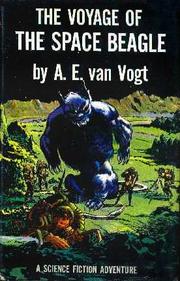
The Voyage of the Space Beagle
By Unknown Author
One of the great original classics of modern SF returns! An all-time classic space saga, The Voyage of the Space Beagle is one of the pinnacles of Golden Age SF, an influence on generations of stories. An episodic novel filled with surprises and provocative ideas, this is the story of a great exploration ship sent out into the unknown reaches of space on a long mission of discovery. They encounter several terrifying alien species, including the Ix, who lay their eggs in human bodies, which then devour the humans from within when they hatch. This is one of the most entertaining and gripping stories in all of classic SF.
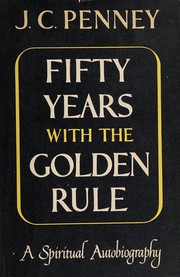
Fifty years with the Golden Rule
By Unknown Author
Autobiography of James Cash Penney, entrepreneur, Christian, philanthropist.
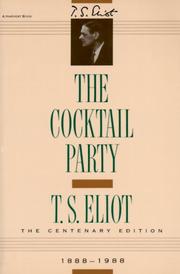
The cocktail party
By Unknown Author
This drawing-room comedy is a modern verse play about the search for meaning, in which a psychiatrist is the catalyst for the action. "Eliot really does portray real-seeming characters. He cuts down his poetic effects to the minimum, and then finally rewards us with most beautiful poetry" (Stephen Spender).
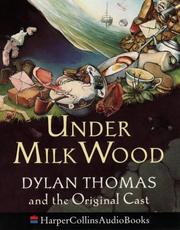
Under Milk Wood
By Unknown Author
A poetic tale of a village told by diverse voices

The landing of the Pilgrims
By Unknown Author
In order to escape religious persecution, a group of English Separatists set sail for America in 1620, hoping to establish a new colony.
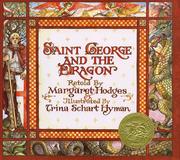
Saint George and the Dragon
By Unknown Author
Retells the segment from Spenser's The Faerie Queene, in which George, the Red Cross Knight, slays the dreadful dragon that has been terrorizing the countryside for years and brings peace and joy to the land.

The Wizard of Oz. Mit Materialien.
By Unknown Author
Dorothy and her little dog, Toto get swept away to a magical land and search for the way back to Kansas.
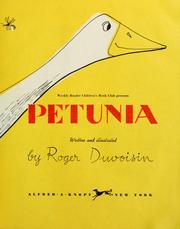
Petunia
By Unknown Author
Petunia, the goose, learns that possessing knowledge doesn't mean carrying a book around constantly.
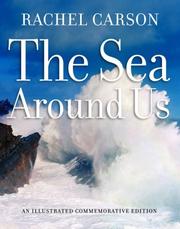
The Sea Around Us
By Unknown Author
Published in 1951, The Sea Around Us is one of the most remarkably successful books ever written about the natural world. Rachel Carson's rare ability to combine scientific insight with moving, poetic prose catapulted her book to first place on The New York Times best-seller list, where it enjoyed wide attention for thirty-one consecutive weeks. It remained on the list for more than a year and a half and ultimately sold well over a million copies, has been translated into 28 languages, inspired an Academy Award-winning documentary, and won both the 1952 National Book Award and the John Burroughs Medal. This classic work remains as fresh today as when it first appeared.^ Carson's writing teems with stunning, memorable images--the newly formed Earth cooling beneath an endlessly overcast sky; the centuries of nonstop rain that created the oceans; giant squids battling sperm whales hundreds of fathoms below the surface; and incredibly powerful tides moving 100 billion tons of water daily in the Bay of Fundy. Quite simply, she captures the mystery and allure of the ocean with a compelling blend of imagination and expertise. Reintroducing a classic work to a whole new generation of readers, this Special Edition features a new chapter written by Jeffrey Levinton, a leading expert in marine ecology, that brings the scientific side of The Sea Around Us completely up to date. Levinton incorporates the most recent thinking on continental drift, coral reefs, the spread of the ocean floor, the deterioration of the oceans, mass extinction of sea life, and many other topics. In addition, acclaimed nature writer Ann Zwinger has contributed a brief foreword.^ Today, with the oceans endangered by the dumping of medical waste and ecological disasters such as the Exxon oil spill in Alaska, this illuminating volume provides a timely reminder of both the fragility and the importance of the ocean and the life that abounds within it. Anyone who loves the sea, or who is concerned about our natural environment, will want to read this classic work.
The Pests of Crops in Indonesia
By Unknown Author
A notable work from 1950.
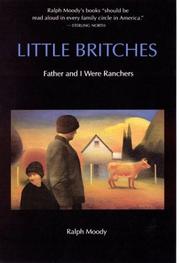
Little Britches
By Unknown Author
The author shares his family's experience living on a Colorado ranch in the early twentieth century.

The Secret of the Wooden Lady
By Unknown Author
Nancy Drew and her friends visit an old clipper ship in Boston harbor and help Captain Easterly uncover a mystery.
Abnormal psychology and modern life
By Unknown Author
A notable work from 1950.
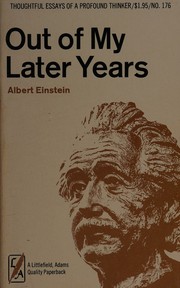
Out of my later years
By Unknown Author
Albert Einstein, among the greatest scientists of all time, was also a man of profound thought and deeply humane feelings. His collected essays offer a fascinating and moving look at one of the twentieth century's leading minds. Covering a fifteen year period from 1934 to 1950, the contents of this book have been drawn from Einstein's articles, addresses, letters and assorted papers. Through his words, you can understand the man and gain his insight on social, religious, and educational issues.
Shooting an Elephant and other essays
By Unknown Author
'Shooting an Elephant' is Orwell's searing and painfully honest account of his experience as a police officer in imperial Burma; killing an escaped elephant in front of a crowd 'solely to avoid looking a fool'. The other masterly essays in this collection include classics such as 'My Country Right or Left', 'How the Poor Die' and 'Such, Such were the Joys', his memoir of the horrors of public school, as well as discussions of Shakespeare, sleeping rough, boys' weeklies and a spirited defence of English cooking. Opinionated, uncompromising, provocative and hugely entertaining, all show Orwell's unique ability to get to the heart of any subject.
Classical mechanics
By Unknown Author
This classic book enables readers to make connections between classical and modern physics -- an indispensable part of a physicist's education. In this new edition, Beams Medal winner Charles Poole and John Safko have updated the book to include the latest topics, applications, and notation to reflect today's physics curriculum.

The Human Use of Human Beings
By Unknown Author
"Only a few books stand as landmarks in social and scientific upheaval. Norbert Wiener's classic is one in that small company. Founder of the science of cybernetics--the study of the relationship between computers and the human nervous system--Wiener was widely misunderstood as one who advocated the automation of human life. As this book reveals, his vision was much more complex and interesting. He hoped that machines would release people from relentless and repetitive drudgery in order to achieve more creative pursuits. At the same time he realized the danger of dehumanizing and displacement. His book examines the implications of cybernetics for education, law, language, science, technology, as he anticipates the enormous impact--in effect, a third industrial revolution--that the computer has had on our lives."--Back cover.
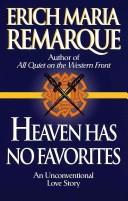
Der Himmel kennt keine Günstlinge
By Unknown Author
Tensions and problems of life in a tuberculosis sanatorium high in the Swiss Alps, and the tragic love story of a vivacious girl and a grand prix race-track driver.
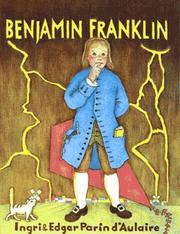
Benjamin Franklin (We the people)
By Unknown Author
A biography of the witty author, scientist, and statesman who helped with the Declaration of Independence and the Constitution and became the first ambassador of the United States of America.
The urban pattern
By Unknown Author
A notable work from 1950.
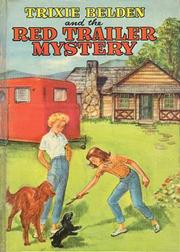
Trixie Belden and the red trailer mystery
By Unknown Author
Trixie Belden and Honey Wheeler’s friend Jim Frayne has run away from Sleepyside–before anyone could tell him that he is the only heir to the huge Frayne fortune. The girls set out across upstate New York in a trailer to track him down... and stumble onto another mystery along the way!
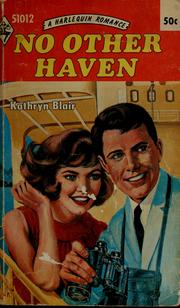
No Other Haven
By Unknown Author
From the moment Lindsey Gresham and Stuart Conlowe met, on board the ship that was taking them both to Cape Town, they felt attracted to each other. And when Lindsey received a cable informing her of the death of the aunt to whom she was travelling - an event which left her alone in the world and penniless - Stuart at once suggested that she should marry him. They were, he said, very good friends, and their marriage would remain on a purely friendly footing until their mutual liking had grown into love. But marriages in name only, rarely prosper; and the difficulties in Lindsey's case were further complicated by the advent of the other woman in Stuart's life.
Treasures of the Snow
By Unknown Author
A notable work from 1950.
A Bell for Ursli
By Unknown Author
A notable work from 1950.
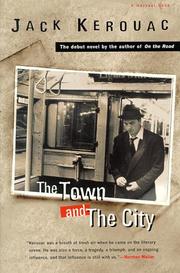
The town and the city
By Unknown Author
The Town and the City is a novel by Jack Kerouac, published by Harcourt Brace in 1950. This was the first major work published by Kerouac, who later became famous for his second novel On the Road (1957). Like all of Jack Kerouac's major works, The Town and the City is essentially an autobiographical novel, though less directly so than most of his other works. The Town and the City was written in a conventional manner over a period of years, and much more novelistic license was taken with this work than after Kerouac's adoption of quickly written "spontaneous prose". The Town and the City was written before Kerouac had developed his own style, and it is heavily influenced by Thomas Wolfe (even down to the title, reminiscent of Wolfe titles such as The Web and the Rock). The novel is focused on two locations (as suggested by the title): one, the early Beat Generation circle of New York in the late 1940s, the other, the nearly rural small town of Galloway, Massachusetts that the main character comes from, before going off to college on a football scholarship. Galloway represents the town of Lowell, Massachusetts, which the Merrimack river runs through, and where Kerouac was raised. The experiences of the young "Peter Martin" struggling for success on the high school football team are largely those of Jack Kerouac (he returns to the subject again in his last work Vanity of Duluoz, published in 1968). The "city" represents a number of figures of the early beat circle: Allen Ginsberg (as Leon Levinsky), Lucien Carr (as Kenneth Wood), William Burroughs (as Will Dennison), Herbert Huncke (as Junky), David Kammerer (as Waldo Meister), Edie Parker (as Judie Smith) and also Joan Vollmer (as Mary Dennison) -- though she essentially has a non-speaking role (however some of her ideas are quoted by the Ginsberg-figure). Near the end of the novel, the Waldo Meister character dies by falling from the window of Kenneth Wood's apartment (a distant echo of the real event: David Kammerer knifed by Lucien Carr, possibly in self-defense). In the novel the police largely just accept this as a suicide. A version of the events closer to the truth can be found in Vanity of Duluoz, in which Carr was arrested and eventually accepted a plea of manslaughter and a prison sentence; and Kerouac was arrested and held briefly as an accessory after the fact. Still another version of the story can be found in an early novel Kerouac collaborated on with William S. Burroughs, And the Hippos Were Boiled in Their Tanks, published after Kerouac’s death.
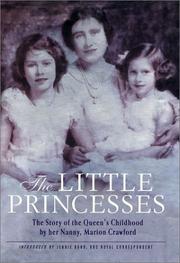
The Little Princesses
By Unknown Author
Once upon a time, in 1930s England, there were two little princesses named Elizabeth and Margaret Rose. Their father was the Duke of York, the second son of King George V, and their Uncle David was the future King of England.We all know how the fairy tale ended: When King George died, “Uncle David” became King Edward VIII---who abdicated less than a year later to marry the scandalous Wallis Simpson. Suddenly the little princesses’ father was King. The family moved to Buckingham Palace, and ten-year-old Princess Elizabeth became the heir to the crown she would ultimately wear for over fifty years.The Little Princesses shows us how it all began. In the early thirties, the Duke and Duchess of York were looking for someone to educate their daughters, Elizabeth and Margaret, then five- and two-years-old. They already had a nanny---a family retainer who had looked after their mother when she was a child---but it was time to add someone younger and livelier to the household. Enter Marion Crawford, a twenty-four-year-old from Scotland who was promptly dubbed “Crawfie” by the young Elizabeth and who would stay with the family for sixteen years. Beginning at the quiet family home in Piccadilly and ending with the birth of Prince Charles at Buckingham Palace in 1948, Crawfie tells how she brought the princesses up to be “Royal,” while attempting to show them a bit of the ordinary world of underground trains, Girl Guides, and swimming lessons.The Little Princesses was first published in 1950 to a furor we cannot imagine today. It has been called the original “nanny diaries” because it was the first account of life with the Royals ever published. Although hers was a touching account of the childhood of the Queen and Princess Margaret, Crawfie was demonized by the press. The Queen Mother, who had been a great friend and who had, Crawfie maintained, given her permission to write the account, never spoke to her again.
Many Mansions
By Unknown Author
A notable work from 1950.
Smallbone Deceased
By Unknown Author
The new lawyer Henry Bohun had joined the firm to work on insurance cases, not murders, but... *"At eleven o'clock this morning a partner in this firm of solicitors — what's their name? — Horniman, Birley and Craine, opened one of their deed boxes. The box was supposed to contain papers relating to a trust. What they found was one of the trustees. Name of Smallbone — Marcus Smallbone — very dead."*
El camino
By Unknown Author
Daniel el Mochuelo intuye a sus once años que su camino está en la aldea, junto a sus amigos, sus gentes y sus pájaros. Pero su padre quiere que vaya a la ciudad a estudiar el Bachillerato. A lo largo de la noche que precede a la partida, Daniel, insomne, con un nudo en la garganta, evocará las correrías con sus amigos -Roque el Moñigo y Germán el Tiñoso- a través de los campos, descubriendo el cielo y la tierra, y revivirá las andanzas de la gente sencilla de la aldea. La simpatía humana con que esa mirada infantil nos introduce en el pueblo, haciéndonos conocer toda una impresionante galería de tipos, y la fuerza con que, a través de rasgos frecuentemente caricaturescos, se nos presentan siempre netos y vivos, son los grandes aciertos de esta novela. *El camino* es, por su amalgama de nitidez realista, humor sutil, nostalgia contenida e irisación poética, no sólo una de las mejores novelas de Miguel Delibes , sino también, como señalara la crítica, una de las obras maestras de la narrativa contemporánea. Tercera novela del escritor español Miguel Delibes, y publicada en 1950, *El camino* está ambientada en la España rural de la posguerra. Aunque no hay referencias geográficas, es fácil identificar el lugar con Cantabria, en concreto con el pueblo de Molledo (Valle de Iguña), donde el autor pasaba sus vacaciones veraniegas en la infancia. Según confesión del autor, con esta obra encontró su estilo narrativo.

The Goldsmith's Wife
By Unknown Author
The Goldsmith's Wife was eighteen year old Jane Shore whose golden beauty brought England's greatest lover to woo her in disguise. Exchanging Cheapside for Westminster, she became the favourite mistress of Edward IV and set his brilliant, profligate court ablaze with merriment. Whatever the consequences, nothing mattered to Jane beside the passion aroused by Edward's touch.
Le fils du pauvre
By Unknown Author
A notable work from 1950.
To Love and to Honor
By Unknown Author
Impetuous Cindy Clinton signed a marriage contract with a man she had never met in order to save her father's worldwide oil interests. Now, with her father dead, Cindy was determined to be free of Ken Stewart, her husband in name only. Then one day a tall, handsome stranger came to see Cindy. He said he was Ken Stewart's emissary and he urged her not to try for a divorce. Why, Cindy wondered, did Ken Stewart want her to stay married to him - a man she neither knew nor loved? Little did Cindy know that her search for the answer to that baffling riddle was to take her into the sinister world of international thugs, where more than her right to happiness was in danger - her life itself was threatened!
The 13 Clocks
By Unknown Author
"There has never been anything like this before, and there will never be anything like this again…[Thurber] takes such delight in the words. It's like it's written by somebody who wants to infect you with his love of words. There are poems hidden in the text. There are places where it wanders into rhyme and out again. There are all of the invented words. The story itself is nonsense in the finest possible way." —Neil Gaiman, interviewed in The Wall Street Journal

The Ship of Adventure
By Unknown Author
*All aboard for a quiet cruise among the Greek Islands*. When Philip's pet monkey breaks a birthday present, Philip, Dinah, Lucy-Ann and Jack are plunged into an exciting quest to find the lost treasure of the Andra -- with some ruthless villains hot on their trail.

Neurosis and human growth
By Unknown Author
A notable work from 1950.

The Wishing Chair Again
By Unknown Author
Mollie and Peter have a wonderful Wishing-Chair which they keep in their playroom at the bottom of the garden. While they are at Boarding School their pixie friend Chinky looks after it for them; but in the holidays the Chair grows wings and takes them on trips to all sorts of odd places.
El laberinto de la soledad
By Unknown Author
A notable work from 1950.
Great Britain
By Unknown Author
A notable work from 1950.
83 string quartets.
By Unknown Author
A notable work from 1950.
The grammar of conducting
By Unknown Author
The author proposes a course of baton training that allows the student to progress from simple to more exacting assignments, always applying baton technique to carefully chosen musical examples.
The child who never grew
By Unknown Author
The Child Who Never Grew is Buck’s candid memoir of her relationship with her oldest daughter, who was born with a rare type of mental retardation. A forerunner of its kind, the memoir was published in 1950 and helped demolish the cruel taboos surrounding learning disabilities. Buck describes life with her daughter, Carol, whose special needs led Buck to send her to one of the best schools for disabled children in the United States—which she paid for in part by writing The Good Earth, her multimillion-selling classic novel. Brave and touching, The Child Who Never Grew is a heartrending memoir of parenting. As Buck writes, “I learned respect and reverence for every human mind. It was my child who taught me to understand so clearly that all people are equal in their humanity and that all have the same human rights.”
By Yet Another Door
By Unknown Author
When Nurse Joanna Merivale went to Ireland to nurse Roger Carnehill, it was at first just another job to her. But in that job her first thought was to give of her best — something that looked like being impossible in the household full of emotional problems in which she found herself. There was her patient, cruelly frustrated by his accident; young Shuan, who was bitterly jealous of Joanna's skill in handling Roger; Magda, mocking and sophisticated, and René, generous and unselfish. And to add to all these difficulties, Joanna soon found that her own emotions were to be involved as deeply as everyone else's... She felt she belonged here. Joanna knew better than to indulge her feelings when she was nursing, but at Carrieghmere this Irish family and its problems had involved her from the very beginning. "It's like a place I've been homesick for all my life," she said. And not just the place. Roger Carnehill was a man she'd been waiting for, too. But that would bring her no happiness -- because Roger was waiting for beautiful young Shuan!
Modern Danish bookbindings : USA 1950.
By Unknown Author
A notable work from 1950.
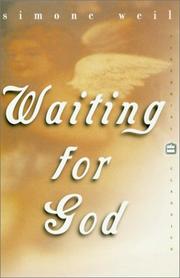
Attente de Dieu
By Unknown Author
A notable work from 1950.

The veldt
By Unknown Author
The veldt is a story from the compilation, The Illustrated Man. This is a cautionary tale about computer dependence.
Manuscrit trouvé à Saragosse
By Unknown Author
A set of tales within a tale of a wandering a French army officer's encounters of the supernatural as he travels after the siege of Saragossa. According to the preface by Roger Caillois, it was originally published in St. Petersburg around 1804 by the Polish writer Count Jan Potocki and part of the work was published in Paris in 1893. The French version was published in Polish in 1847 and several editions came out during the next century. Additional parts of the French version were found in Cracow in around 1956. This version follows the St. Petersburg text and does not include the new fragments. The tales are marvelous. They contain illusion and fantasy as the characters tell their stories. The narrator (Officer) has a difficult time determining what is real, and so will you. There is death and corpses, beguiling spirit temptresses, phantoms, cabala, gypsies and much more - sometimes there is even a thread to connect the tales! As a bonus, try to find the film version, which is just as fascinating. The entire film, but in segments, is available on YouTube in Polish. Somewhere, there is a version with English subtitles, which certainly adds to the dialog if you don't understand Polish.
The supreme identity
By Unknown Author
A notable work from 1950.
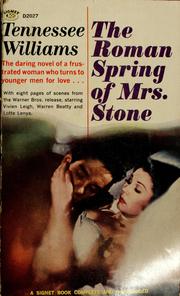
The Roman spring of Mrs. Stone
By Unknown Author
A notable work from 1950.

Kate Hannigan
By Unknown Author
***Master of romantic fiction Catherine Cookson is world renowned for her enthralling tales of love that triumphs over impossible odds. In "Kate Hannigan," her very first novel, Catherine Cookson introduces us to the enduring story of her most charismatic heroine.*** **The moment he lays eyes on Kate, Dr. Rodney Prince is enchanted.** He senses in this poverty-stricken patient an intelligence and warmth that's completely unexpected. His own wife, living in the oblivion of velvet cushions and lavish dinner parties, seems crude by comparison. Though they meet only briefly then retreat to their separate worlds, the image of Kate leaves an indelible mark upon his mind. **Rodney knows that Kate's spirit has survived life-long suffering at the hands of men.** Her father, an embittered dock worker, directed his violent rages toward Kate and her mother. At age eighteen Kate fell victim to a smooth-talking seducer and became the unwed mother of a child she later compromised her dignity to support. Such circumstances only deepen Rodney's desire to rescue Kate and overturn the codes of a society that serve to keep them apart. **As the kindhearted Dr. Prince unintentionally wins over the heart of Kate's fatherless daughter, he and Kate begin to acknowledge that the gap between rich and poor might not be so great after all.** ***Available now in the United States, "Kate Hannigan" remains a timeless tribute to romantic love. England's late, great Catherine Cookson has spun the unforgettable tale of a wealthy man caught in a loveless marriage, a young woman trapped in the slums, and their defiance of the mores of Edwardian society.**

Architecture in Britain, 1530-1830
By Unknown Author
Pt. 1: The English Renaissance (1530-1610) -- Pt. 2: Inigo Jones and his times (1610-1660) -- Pt. 3: Wren and the Baroque (1660-1710) -- Pt. 4: The Palladian phase (1710-1750) -- Pt. 5: Neo-classicism and the Picturesque (1750-1830) -- Appendix 1: Architecture in Scotland (1530-1707) -- Appendix 2: English architecture in America -- Plates.
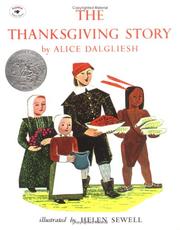
The Thanksgiving story
By Unknown Author
A Pilgrim family's struggle to survive in their harsh new homeland culminates in a thanksgiving feast.
The meaning of anxiety
By Unknown Author
A notable work from 1950.
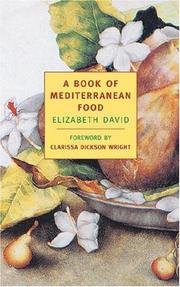
A Book of Mediterranean Food
By Unknown Author
Long acknowledged as the inspiration for such modern masters as Julia Child and Claudia Roden, A Book of Mediterranean Food is Elizabeth David's passionate mixture of recipes, culinary lore, and frank talk. In bleak postwar Great Britain, when basics were rationed and fresh food a fantasy, David set about to cheer herself —and her audience— up with dishes from the south of France, Italy, Spain, Portugal, Greece, and the Middle East. Some are sumptuous, many are simple, most are sublime.